

Time value and volatility
Overview
An option premium can be split into two parts: intrinsic value and extrinsic value. Intrinsic value is what the option would be worth if it expired immediately. Extrinsic value is everything in the premium above intrinsic value, and in practical use it is often called time value because it reflects the value of having time left for the underlying to move before expiry.
For a call, intrinsic value is the amount by which the underlying price is above the strike. For a put, intrinsic value is the amount by which the strike is above the underlying price. If an option is out of the money, it has no intrinsic value, so its premium is entirely extrinsic.
Time matters because options are wasting assets. All else equal, the time value portion usually falls as expiry approaches, and that erosion often becomes more noticeable near expiry. At the money options usually show this most clearly. Deep in the money options often have little time value, while deep out of the money options can have only time value but often less than comparable at the money contracts with the same expiry.
Volatility matters because implied volatility is backed out from current option prices using an option pricing model. In practical terms, it is the market-implied price of uncertainty over the life of that option, not a direct forecast of direction. Higher implied volatility usually increases premiums for both calls and puts because larger expected moves increase the chance of finishing with meaningful value.
Term structure matters because different expiries can trade at different implied volatilities. Short dated uncertainty may be priced differently from medium or long dated uncertainty, and scheduled events can lift implied volatility in expiries that contain the event, then reduce it after the event has passed. That is the practical link between calendar time, event risk, and option premiums.
Core definitions
Step by step walkthrough
The practical reason time matters is simple. More time remaining means more opportunity for the underlying to move into a more valuable state before expiry. That optionality has value, so otherwise similar options with more time remaining usually carry more extrinsic value.
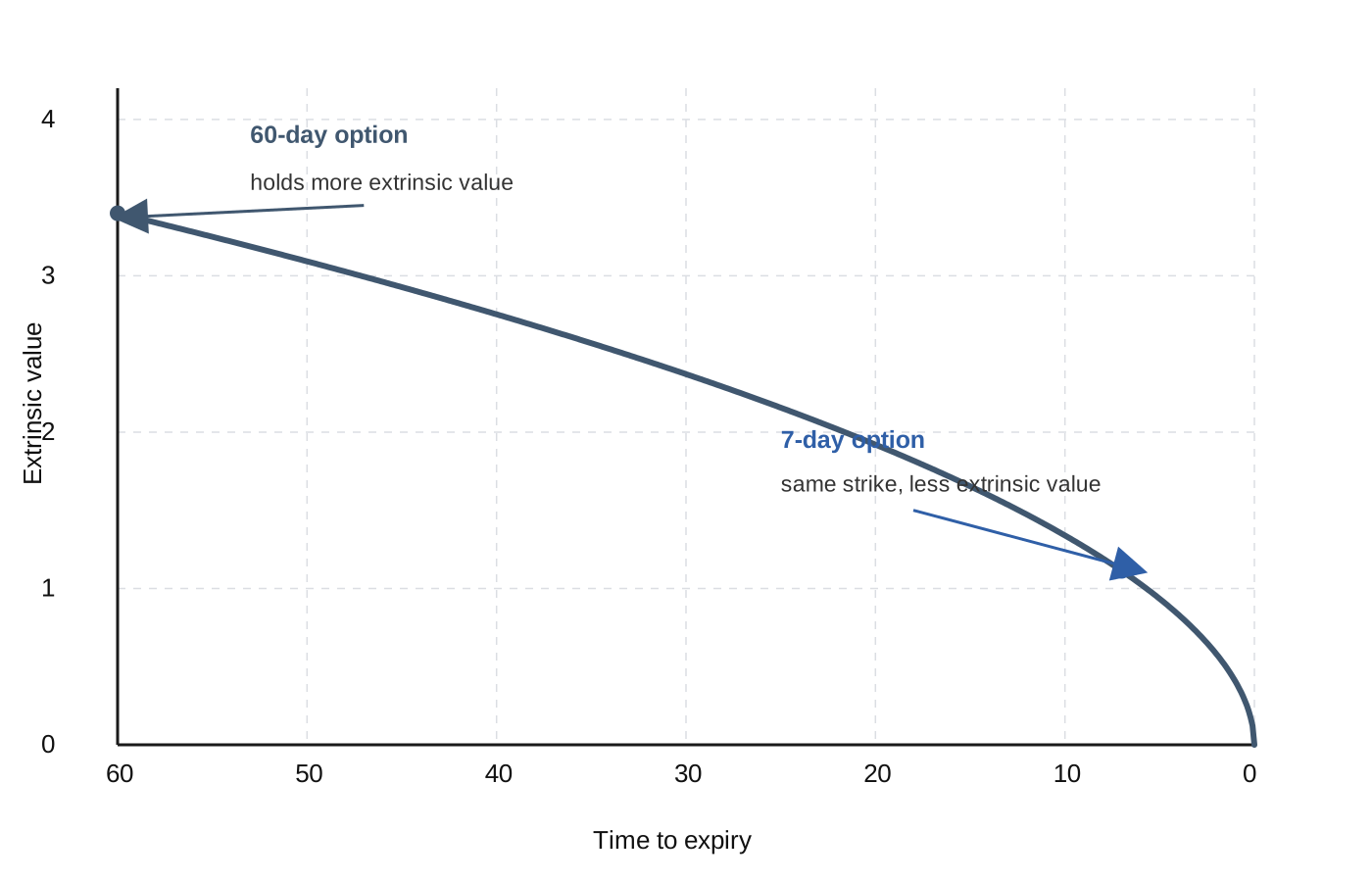
This does not mean time value disappears in a straight line. In practice, at the money options usually carry the greatest time value for a given expiry because even a modest move can change their intrinsic status materially.
Deep in the money options often trade with little time value because much of their premium is already intrinsic. Deep out of the money options have no intrinsic value, but their time value is often lower than comparable at the money options because a larger move is needed before expiry.
This broad pattern applies to both calls and puts. Time value erosion occurs for both, and is often most noticeable in at the money options.
A practical review loop
A useful way to review an option is to move through value, time, volatility, and event exposure in order. This keeps the analysis grounded in the premium actually being traded rather than in one variable viewed in isolation.
Worked examples
The examples below keep the mechanics simple. Their purpose is to show how the same option framework can explain very different premium behaviour.
Assume an underlying share price of £105, a strike of £100, and a call option. Contract A expires in 7 days and trades at £5.80. Contract B expires in 60 days and trades at £8.40.
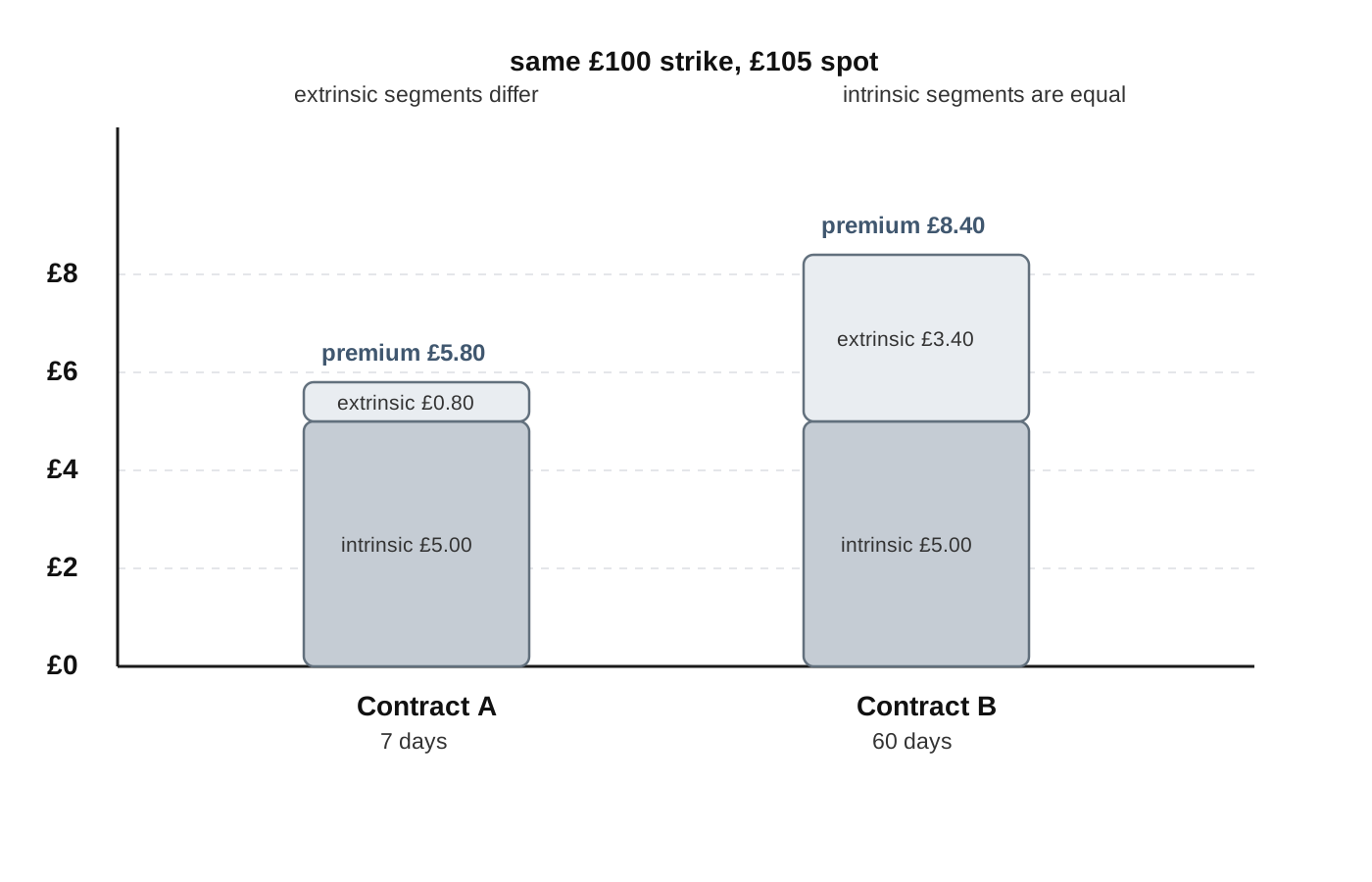
For both calls, intrinsic value = max(105 - 100, 0) = £5.00.
Extrinsic value for Contract A = £5.80 - £5.00 = £0.80. Extrinsic value for Contract B = £8.40 - £5.00 = £3.40.
Both options have the same intrinsic value because they have the same strike and the same underlying price. The longer dated option carries more extrinsic value because it has more time for the underlying to move further in the buyer’s favour before expiry.
If the underlying stays near £105 and implied volatility is unchanged, the 7 day option’s £0.80 of extrinsic value has much less time to survive. The 60 day option’s £3.40 of extrinsic value can erode more slowly at first, though not necessarily linearly.
This is why two calls with the same strike can look similar on intrinsic value but behave very differently in premium terms.
| Measure | Basis | Value |
|---|---|---|
| Underlying share price | Stated | £105.00 |
| Strike | Stated | £100.00 |
| Intrinsic value | max(105 minus 100, 0) | £5.00 |
| Contract A premium | 7 days to expiry | £5.80 |
| Contract A extrinsic value | 5.80 minus 5.00 | £0.80 |
| Contract B premium | 60 days to expiry | £8.40 |
| Contract B extrinsic value | 8.40 minus 5.00 | £3.40 |
| Contract B extrinsic value | £3.40 | |
Assume an underlying share price of £100 before earnings, a £100 strike call, and expiry in 10 days. The day before earnings, the premium is £4.20. At that point the option has intrinsic value of £0.00 and extrinsic value of £4.20.
After earnings, assume the share price is £100.50 and the new premium is £2.10.
Recalculate intrinsic value after the event: max(100.50 - 100, 0) = £0.50.
Recalculate extrinsic value after the event: £2.10 - £0.50 = £1.60.
What changed is clear. The underlying moved only £0.50. Total premium fell from £4.20 to £2.10. Intrinsic value rose by £0.50, but extrinsic value fell by £2.60.
The option became slightly in the money, but the premium still fell because the market removed a large amount of event related implied volatility after the announcement. This is a plain example of event premium being added before a scheduled event and then reduced after the event passes.
| Measure | Basis | Value |
|---|---|---|
| Underlying before earnings | Stated | £100.00 |
| Premium before earnings | Day before, 10 days to expiry | £4.20 |
| Intrinsic value before earnings | max(100 minus 100, 0) | £0.00 |
| Extrinsic value before earnings | 4.20 minus 0.00 | £4.20 |
| Underlying after earnings | Stated | £100.50 |
| Premium after earnings | Stated | £2.10 |
| Intrinsic value after earnings | max(100.50 minus 100, 0) | £0.50 |
| Extrinsic value after earnings | 2.10 minus 0.50 | £1.60 |
| Extrinsic value after earnings | £1.60 | |
Checklists
These checklists are designed to keep the review process practical and consistent.
Time value and volatility review checklist
Event and expiry pricing checklist
Glossary
- At the money
An option whose strike is close to the current underlying price. These options often carry the most time value sensitivity.
- Extrinsic value
The part of premium above intrinsic value. In plain usage this is the same practical concept as time value.
- Implied volatility
The volatility implied by current option prices through a pricing model. It reflects the market pricing of expected uncertainty, not direction.
- Intrinsic value
The amount an option is in the money at the current underlying price, as if it expired immediately.
- Moneyness
The relationship between strike and current underlying price that determines whether an option is in, at, or out of the money.
- Realised volatility
Backward looking volatility calculated from actual past returns, commonly annualised standard deviation.
- Term structure
The pattern of implied volatility across expiries. Different maturities may price different levels of expected uncertainty.
- Time to expiry
The remaining life of the option before expiration. More time usually supports more extrinsic value.
- Time value
The part of premium attributable to time remaining until expiry. It is premium in excess of intrinsic value.
Verified callouts
Verified, intrinsic versus extrinsic value in plain terms
Intrinsic value is what the option would be worth if it expired now. Extrinsic value is the remainder of the premium above that amount, mainly reflecting time remaining and uncertainty priced by the market. Out of the money options have no intrinsic value, so their premium is entirely extrinsic.
Verified, implied volatility is not a directional forecast
Implied volatility is inferred from option prices and represents the market pricing of expected movement or uncertainty over the option’s life. It does not, by itself, say whether the underlying is expected to rise or fall. Calls and puts can both become more expensive when implied volatility rises.
Verified, event risk can raise implied volatility before the event and reduce it after the event
Scheduled events can concentrate uncertainty into specific expiries, lifting the implied volatility of options that contain that event. Once the event passes, that layer of uncertainty is removed, so implied volatility and extrinsic value can fall even if the underlying hardly moves. This is an inference from standard pricing mechanics, implied volatility term structure, and the fact that higher expected uncertainty lifts option premiums.
Related definitions and follow on topics
Definitions
- Intrinsic value
- Extrinsic value
- Time value
- Option premium
- Implied volatility
- Realised volatility
- Moneyness
- In the money, at the money, out of the money
- Time to expiry
- Time decay
- Vega
- Theta
- Term structure of implied volatility
- Volatility skew and smile
- Event risk in options
- Earnings and options pricing
- Option expiry types
- American style versus European style exercise
- Why option premiums change
A high level comparison: time value versus volatility
Time value and implied volatility both sit inside the extrinsic part of an option premium, but they describe different things. Time value reflects the benefit of having time left before expiry. Implied volatility reflects how expensively the market is pricing uncertainty over that life.
In practice, both can support a higher premium, and both can also fall. Time value usually erodes as expiry approaches because options are wasting assets. Implied volatility can rise or fall as the market reprices uncertainty.
That is why looking at premium alone can be misleading. A premium may change because the underlying moved, because time passed, because implied volatility changed, or because all three shifted together.
Time value and volatility are pricing ideas, not settlement ideas
The core ideas in this article are about how option premiums are decomposed and repriced. Intrinsic value, extrinsic value, time to expiry, implied volatility, and term structure explain why premiums change before expiry.
The practical point is that these mechanics apply at the premium level. When reviewing an option, the first question is usually not about settlement style, but about how much of the current price is intrinsic and how much is still exposed to time and implied volatility changes.
That keeps the focus on what the market is actually pricing into the contract over its remaining life.