

Capstone, a simple options playbook
Overview
This playbook treats options as a weekly operating process rather than a collection of isolated trade ideas. The sequence is simple and deliberate: confirm the contract terms, reject poor liquidity, choose an expiry that matches the intended holding period, check whether implied volatility looks rich or cheap relative to the structure under consideration, select from a short list of defined structures, then manage the position with pre-written exit rules.
That order matters. Exchange-listed options are standardised contracts, but the details still change what a position can cost, what it can become, and what can happen at expiration or assignment. Style, settlement method, multiplier, strike, and expiry are not side notes. They are the mechanics that define the trade.
A useful playbook is therefore less about prediction and more about fit. A covered call can fit a stock holder willing to sell at a chosen price. A debit spread can fit a directional view with capped risk. A cash-secured put can fit a willingness to buy stock at an effective discount. You do not need an encyclopaedia of strategies to operate well. A small menu with clear rules is easier to repeat consistently.
This article is framed around U.S. listed options because the cited sources are U.S. venue and regulator materials. Where venue-specific details can vary, the points here are limited to what is supported across those sources. Last reviewed for this article: 11 May 2026.
Key definitions
Step by step walkthrough
The weekly operating loop
The strength of this playbook is consistency. Running the same checks every week helps keep the focus on fit, execution, and risk management rather than on finding ever more complicated trade ideas.
Worked examples
These examples are illustrations of the playbook logic using the assumptions given in the approved research.
Assume 100 shares of XYZ are owned at $48, and 1 XYZ 52 call expiring in 21 days is sold for 1.20. With a 100 multiplier, the premium received is $120 before fees. The option is treated as a standard American-style equity option.
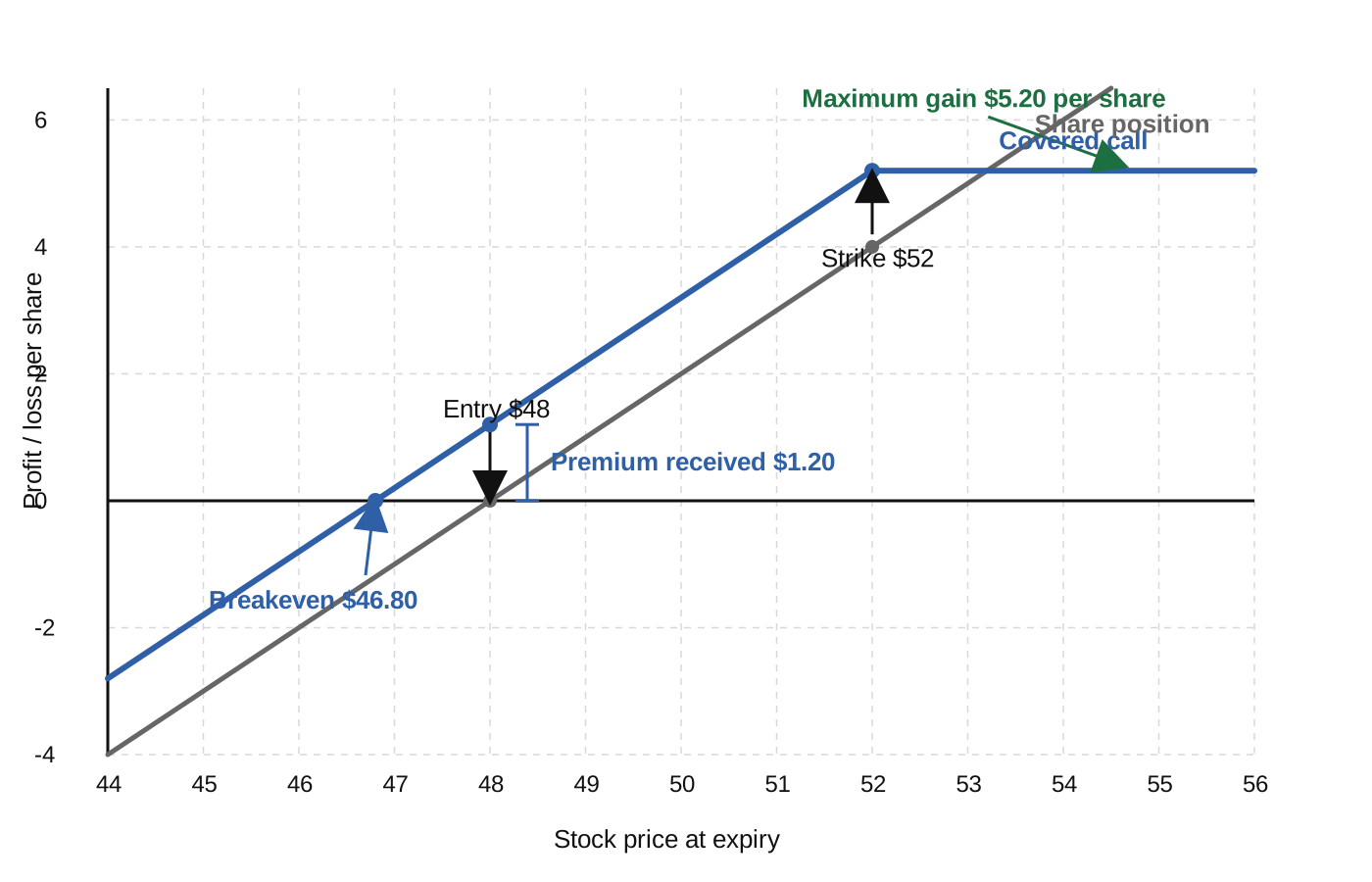
At entry, the share position value is $4,800 and the short call premium received is $120. The gross covered call position basis, net of premium, is therefore $4,680.
After 10 days, suppose XYZ is still $48 and the 52 call falls from 1.20 to 0.55 because time has passed and the option remains out-of-the-money. The unrealised gain on the short call is 0.65, or $65. This shows the basic effect of time decay on an out-of-the-money short option when other factors are broadly steady.
If XYZ closes at $50 at expiry, the 52 call expires out-of-the-money, the shares remain in the account, the $120 premium is kept, and the stock has an unrealised gain of $200 versus the original $48 cost. Total gross position gain at expiry versus original stock cost is $320.
If XYZ closes at $55 at expiry, the 52 call finishes in-the-money. If it is held through expiry and assigned, the shares are sold at $52. The stock gain realised is $400, the option premium kept is $120, and the total gross gain is $520. Gains above $52 are forfeited because the covered call caps upside.
The lesson is simple: a covered call fits when income and a pre-accepted sale price matter more than unlimited upside. The main management question is whether to allow assignment or to close or roll before expiry if the shares are not meant to leave the account.
| Measure | Basis | Value |
|---|---|---|
| Share position value | 100 shares at $48 | $4,800.00 |
| Call premium received | 1 XYZ 52 call, 21 days, sold at 1.20 | $120.00 |
| Covered call basis | Position value net of premium | $4,680.00 |
| Short call premium after 10 days | 52 call falls from 1.20 to 0.55 | $0.55 |
| Unrealised gain on short call | 1.20 minus 0.55 | $65.00 |
| Total gain if XYZ closes at $50 | Premium kept plus stock gain | $320.00 |
| Total gain if XYZ closes at $55 | Stock gain plus premium kept | $520.00 |
| Total gain, assignment at $55 | $520.00 | |
Assume XYZ shares trade at $100 and the view is moderately bullish over the next month. Compare two call options with the same expiry in 35 days: the long 100 call is quoted 4.00 bid and 4.20 ask, while the short 105 call is quoted 2.10 bid and 2.25 ask. A 100/105 long call debit spread is entered at a net debit of 2.05 using a limit order.
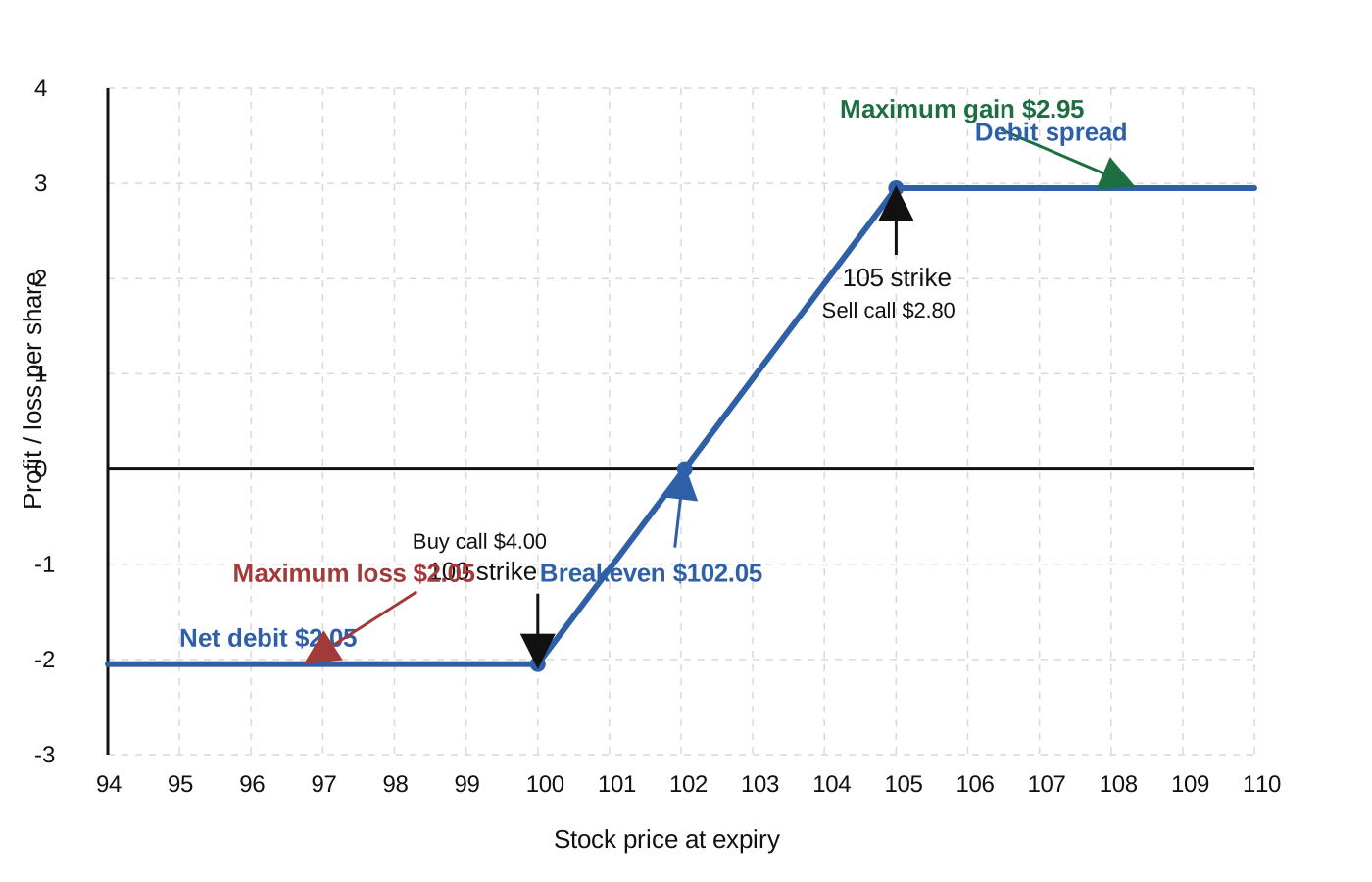
With a 100 multiplier, the net cost is $205 before fees. The maximum value at expiry if fully in-the-money is the width of the strikes, 5.00. That gives a maximum profit of $295 and a maximum loss of $205.
The liquidity check matters here. The long leg is 0.20 wide and the short leg is 0.15 wide. This expiry is chosen because the spreads are acceptable relative to premium, and 35 days leaves time for the move without immediately entering the fastest part of decay. A limit order is used because market orders can receive worse prices when displayed size is limited.
The entry rationale is straightforward. Buying the 100 call outright would cost about $420, while the spread costs about $205, roughly halving premium outlay in exchange for capping upside above $105. That suits a modest rather than explosive bullish view.
The exit plan is written before entry: consider closing if the spread reaches about 70 to 80 per cent of maximum value before expiry, close if the thesis breaks or if the spread value falls by about 40 to 50 per cent from entry, and reduce or exit if the move has not happened by around 10 days to expiry rather than allowing theta to accelerate sharply.
The expiry plan also matters. Avoid holding to expiry if one leg could remain active while the other is not managed, because spread positions can still create risk if protective legs are not exercised or otherwise acted upon.
One possible outcome is that XYZ rises to $104 with 14 days left and the spread marks at 3.40. The position is then worth $340, so gross profit if closed is $135. Closing early removes remaining time and exercise risk.
| Measure | Basis | Value |
|---|---|---|
| Net debit | 100/105 call spread, limit order | $2.05 |
| Net cost | Debit times 100 multiplier | $205.00 |
| Maximum value at expiry | Width of the strikes | $5.00 |
| Maximum profit | 5.00 minus 2.05, times 100 | $295.00 |
| Maximum loss | Initial net cost | $205.00 |
| Spread value, XYZ $104, 14 days left | Marks at 3.40 | $340.00 |
| Gross profit if closed | 340 minus 205 | $135.00 |
| Maximum profit | $295.00 | |
Checklists
A short checklist keeps the playbook operational and repeatable.
Pre-trade weekly checklist
Trade management and scale-up readiness checklist
Glossary
- American-style option
An option that may be exercised at any time before expiration. U.S. equity options are generally American-style.
- European-style option
An option that is generally exercisable only on expiration. Some U.S. index options use this style.
- Assignment
The obligation imposed on the option writer when exercised against.
- Bid-ask spread
The difference between quoted buy and sell prices, and a key liquidity signal.
- Contract multiplier
The factor used to convert quoted premium into currency value, commonly 100 for standard U.S. equity options.
- Expiration date
The date on which the option expires.
- Implied volatility
Expected volatility inferred from current option prices.
- Open interest
The number of outstanding contracts. It is not the same thing as immediate tradable liquidity.
- Realised volatility
Volatility measured from historical price moves.
- Settlement style
Whether exercise leads to stock delivery or cash settlement, depending on product terms.
- Strike price
The price at which the underlying may be bought or sold if exercised.
- Theta
The erosion of option time value as expiration approaches.
- Volume
Contracts traded over a period, commonly the day. Useful, but not a standalone liquidity guarantee.
Verified callouts
Premium, multiplier, and actual cash cost
A quoted option premium is usually stated on a per-share basis, while the contract multiplier converts that quote into actual cash. For a standard U.S. equity option, one contract generally covers 100 shares, so a premium of 2.40 means $240 per contract before fees. Premium paid or received is not the same as the larger notional stock exposure the contract can control.
Liquidity indicators are useful, but not interchangeable
Bid-ask spread is the most immediate signal of likely execution quality, while open interest is only the number of outstanding contracts. OIC states that volume and open interest do not guarantee liquidity, and that displayed bids and offers matter more to the next execution. Limit orders help control price when visible size is thin or conditions are volatile.
Settlement style changes what expiry can create
American-style options may be exercised before expiry, while European-style options are generally exercisable only on expiration. Some products settle into stock, others into cash, so the same in-the-money outcome can produce either a delivery obligation or a cash settlement amount. Because expiring in-the-money options are commonly subject to automatic exercise procedures and short positions may be assigned, pre-written management rules reduce avoidable expiry risk.
Internal links
Definitions
- What Is an Option Contract?
- Call Option
- Put Option
- Strike Price
- Expiration Date
- Contract Multiplier
- Premium
- Intrinsic Value and Time Value
- American-Style vs European-Style Options
- Physical Delivery vs Cash Settlement
- Assignment and Exercise
- Automatic Exercise at Expiration
- Bid-Ask Spread
- Volume vs Open Interest
- Implied Volatility vs Realised Volatility
- Time Decay and Theta
- Covered Call
- Cash-Secured Put
- Debit Spread
- Credit Spread
- Limit Order vs Market Order for Options
High-level comparison of the simple playbook structures
Covered calls and cash-secured puts are stock-linked structures. One starts with stock already owned and seeks premium in exchange for capped upside, while the other starts with a willingness to buy stock lower and accepts the possibility of assignment.
Long calls and long puts are the simplest pure directional choices because the maximum loss is limited to premium paid, but time decay works against them.
Debit spreads and credit spreads both define risk, but they do so in different ways. A debit spread lowers premium outlay versus an outright long option in exchange for capped upside, while a credit spread sells premium with defined maximum loss and still requires careful management near expiry and assignment.
Cash settlement versus stock delivery
Settlement style changes what an option can turn into at exercise or expiry. With stock-delivered products, exercise or assignment can create a share purchase or share delivery obligation. With cash-settled products, the result is a cash amount instead.
This is one reason the contract mechanics check comes first in the playbook. Two options can look similar on a screen but lead to very different operational outcomes depending on whether settlement is by stock delivery or cash and whether the product is American-style or European-style.
Sources
- Characteristics and Risks of Standardized Options
- June 2024 ODD PDF
- Options
- Trading Options: Understanding Assignment
- Equity Options Product Specifications
- General Information FAQ
- Trade Entry & Execution FAQ
- Theta
- Options Basics
- The Facts About Options
- Information memo on exercise-by-exception
- Rules
- SEC filing discussing implied volatility and realised volatility terminology in options context