

What an options contract does in real life
An options contract is a standardised agreement listed on an exchange. It gives the buyer a right and places an obligation on the seller over a defined underlying asset or reference value, at a defined strike price, on or before a defined expiry, for a premium paid up front.
In practice, four terms do most of the mechanical work: premium, strike price, expiry and contract multiplier. The premium is the price paid by the buyer and received by the seller. The strike is the price at which the contract is exercised. Expiry is the final point at which the option exists or may be exercised, depending on style. The multiplier converts the quoted option price into actual money per contract.
Two value ideas matter throughout the contract’s life. Intrinsic value is the amount an option is in the money, if any. Extrinsic value, often called time value, is the part of the premium above intrinsic value. If an option is out of the money, its intrinsic value is zero and its premium is entirely extrinsic value.
The other key distinction is settlement style. A physically settled equity option can create or remove an actual share position after exercise or assignment. A cash-settled index option instead produces a cash debit or credit. Options on futures are another layer again, because exercise or assignment usually creates a futures position unless the product is financially settled.
A useful practical reading is this: quoted premium × multiplier = actual money per contract.
What this article covers
This article focuses on the contract lifecycle as it is experienced at account level: what is bought, what is paid, what can happen before expiry, what happens at expiry, and what changes depending on settlement style.
The sequence follows the practical path of a listed option: selecting the series, converting the quoted premium into real money, holding the position in the account, understanding exercise style, seeing how exercise and assignment flow through clearing, and then dealing with expiry and settlement.
The same broad mechanics apply across equity, index and futures-related listed options, but the settlement outcome can differ sharply. That is why exercise style and settlement style need to be confirmed before trading.
From trade entry to expiry
Start with the contract itself. An option series is defined by its underlying, whether it is a call or put, its strike, expiry and contract size. Those terms are fixed by the listed series. The exchange also specifies whether the option is American style or European style, and whether settlement is physical or cash.
Next, translate the quote into real money. Options are often quoted on a per share or per index point basis, but the actual amount paid or received depends on the multiplier. For a standard equity option, a quote of 2.50 with a 100 multiplier means 250 in contract money terms, before fees and commissions.
When the trade is done, the buyer pays the premium and the seller receives it. The buyer pays a non-refundable premium to acquire the contractual right. The seller receives that premium in return for taking on the contractual obligation if assigned. The premium may later be recovered partly or fully only by selling the option before expiry or through favourable exercise value.
After that, the option lives as a position in the account. Before expiry, its market value moves with the underlying, time remaining, volatility and interest rates. Intrinsic value may rise or fall. Extrinsic value usually declines as expiry approaches. If the option is not closed, exercised or assigned, it remains open until expiry.
Exercise rights depend on style. American-style contracts may generally be exercised on any business day up to and including expiry. European-style contracts may only be exercised during the specified exercise period at expiry. This matters because only American-style short positions face routine early assignment risk.
If a holder exercises, the instruction flows through the clearing chain. The long holder notifies their brokerage firm where required. The brokerage firm passes the instruction to its clearing member, which submits it to the clearing house. The clearing house allocates assignment to clearing members with short positions in that option series, and the assigned clearing member then allocates the assignment to one of its own short customers according to its own method.
The outcome in the account then depends on settlement style. For a physically settled equity call, exercise results in purchase of shares at the strike by the long holder, and assignment requires delivery of shares by the short holder. For a physically settled put, exercise results in sale of shares at the strike by the long holder, and assignment requires purchase of shares by the short holder. For cash-settled index options, no shares move. Cash is credited or debited based on the in-the-money amount multiplied by the contract multiplier. For most options on futures, exercise or assignment creates the underlying futures position rather than a stock position.
At expiry, in-the-money options may be exercised automatically unless contrary instructions are given. Automatic exercise frameworks apply subject to thresholds and product rules, and broker deadlines can be earlier than clearing deadlines. In practice, the broker cut-off is the deadline that matters to the account holder.
Once expired, exercised or assigned, the option contract itself no longer exists. What remains is the result in the account: a cash movement, a share position or a futures position, plus any associated financing, margin or delivery consequences.
A practical decision loop helps keep things simple. First check the five core identifiers: underlying, call or put, strike, expiry and multiplier. Then confirm exercise style and settlement style. After that, check liquidity, because many listed options are managed by closing before expiry rather than by exercising. Tight spreads, active trading and open interest can make exits smoother, while thin contracts can worsen the economic outcome even if the market view is right.
Time needs a separate check. Extrinsic value generally decays as expiry approaches, but expiry is also an operational event, not just a date on a calendar. Standard equity options commonly use third-Friday monthly expiries, while weekly and quarterly series may expire on their listed date. Index and futures-related products can also use AM or PM settlement conventions, and some final values are based on a special opening quotation rather than the live level seen at the close.
That is why a short rule set goes a long way: know the multiplier, know whether the contract is American or European style, know whether settlement is physical, cash or futures, know the broker’s exercise and contrary-instruction deadline, and know what position or cash flow will appear if the option is exercised or assigned. Most avoidable problems happen when expiry arrives before that end state has been decided.
Worked example 1: Physically settled equity call
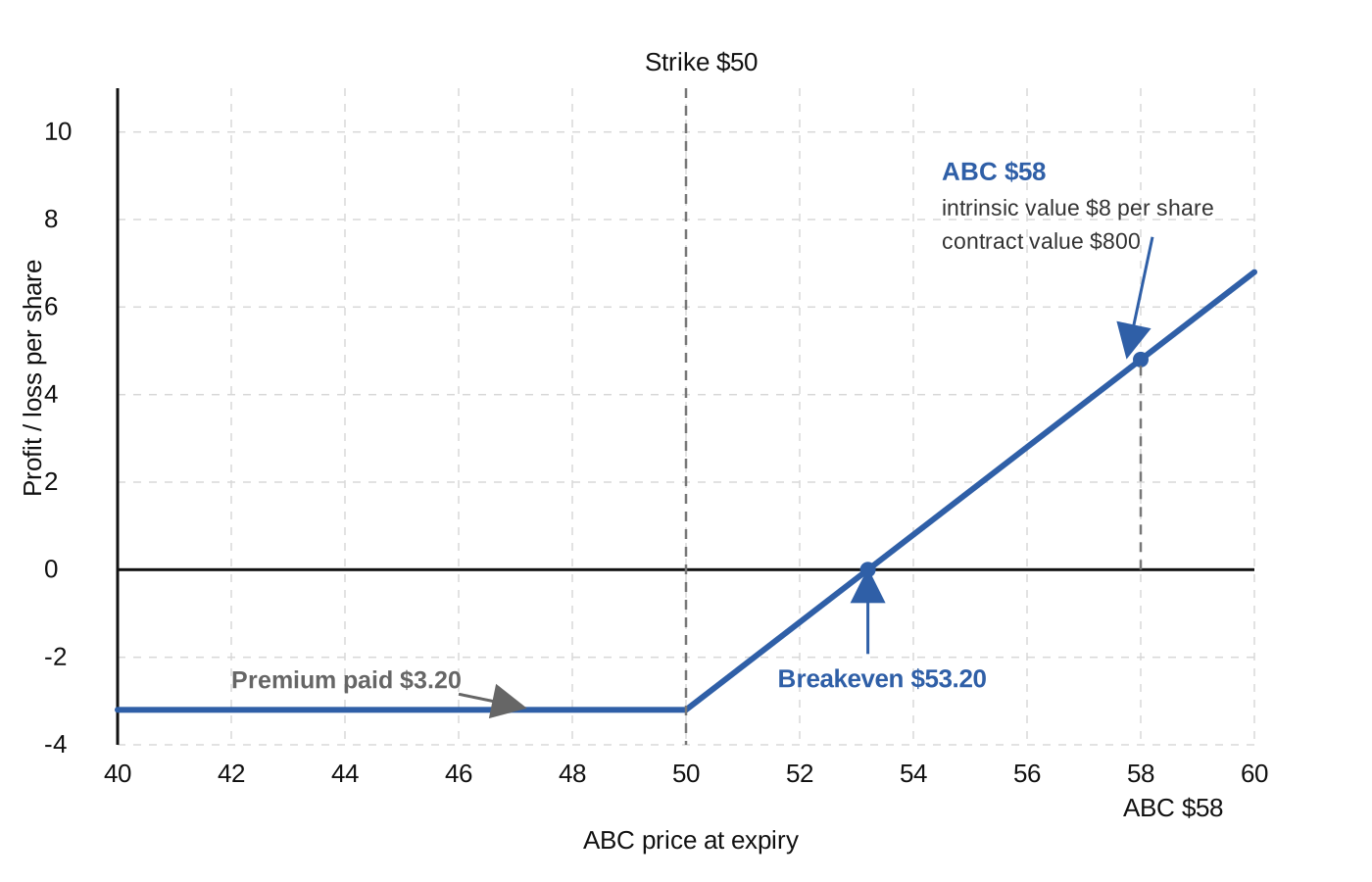
Assume the underlying share price is 52, the option is 1 ABC June 50 call, the style is American, settlement is physical, the multiplier is 100 shares, and the premium paid is 3.20.
At entry, the quoted premium of 3.20 becomes 320 in actual contract cost because 3.20 × 100 = 320, before fees. The buyer now has the right to buy 100 ABC shares at 50 on any business day up to expiry, and the seller has the obligation if assigned.
If ABC is 58 at expiry, intrinsic value is 8 per share. Contract intrinsic value is therefore 800. If exercised, the long holder buys 100 shares for 5,000, and those shares are worth 5,800 at the market price. Gross exercise value is 800, and net profit relative to premium paid is 480 before costs. If the short is assigned, that account must deliver 100 shares and receives 5,000 cash at the strike.
If ABC is 47 at expiry, the call is out of the money, intrinsic value is zero, and if it expires unexercised the option lapses. The long holder loses the 320 premium paid, while the short holder keeps the 320 premium received, before costs and financing.
Worked example 2: Cash-settled index call
Assume a cash-settled index call with strike 4500, settlement value at expiry 4540, multiplier 100, premium paid 18.00, and European style.
At entry, premium paid is 1,800 because 18.00 × 100 = 1,800. The contract references an index value and settles in cash rather than shares.
At expiry, the in-the-money amount is 40 index points. Cash settlement is therefore 4,000 because 40 × 100 = 4,000. Instead of receiving securities, the long account is credited 4,000 cash and the short account is debited 4,000 cash, subject to clearing and broker processing. Net of premium, the long holder’s gross result is 2,200 before costs. No share position is created and no stock delivery is required.
The planning focus is different from the equity example. There is no 100-share delivery step, but the settlement convention still matters because some index-related contracts use special opening values rather than a simple closing print.
Practical checklist
Before trading, confirm the underlying, call or put, strike and expiry. Confirm the multiplier and convert the premium into cash per contract. Confirm whether the option is American or European style, and whether settlement is physical, cash, or creates a futures position. Check the spread and trading activity so the contract can realistically be entered and exited. Check the broker’s exercise, contrary-instruction and expiry handling deadlines.
Before expiry, decide whether the intended end state is close, lapse, exercise or assignment readiness. For physical settlement, confirm capacity to receive or deliver shares at the strike. For cash settlement, estimate the cash debit or credit from the settlement value and multiplier. For options on futures, confirm readiness for the resulting futures position and related margining. Treat broker cut-off times as the real operational deadline, and remember that in-the-money expiring options may be automatically exercised unless contrary instructions are given.
A quoted premium can look small until the multiplier turns it into the full cash amount per contract.
Short American-style positions can face routine early assignment risk before expiry.
Physical settlement can create a share delivery or share purchase obligation at the strike.
Cash-settled products avoid share delivery, but they can still create meaningful cash debits or credits at settlement.
Options on futures usually create a futures position on exercise or assignment, bringing their own margining and settlement rules.
Broker cut-off times for exercise or contrary instructions can be earlier than clearing deadlines.
Thin liquidity and wide spreads can make the economic outcome worse even if the market view is correct.
Some index-related contracts use settlement conventions based on special opening values rather than the live level seen at the close.
Verified takeaways
Contract multiplier and what premium means in actual money terms
A listed option premium is usually quoted in points, not as the full contract cash amount. The actual money paid or received is the quoted premium multiplied by the contract multiplier. For standard US equity options, one contract normally represents 100 shares, so 2.50 means 250 per contract before fees.
Exercise and assignment sequence at account level
When a long holder exercises, the instruction goes from investor to brokerage firm to clearing member and then to the clearing house. The clearing house allocates assignment to clearing members with short positions, and the assigned clearing member then allocates the assignment to one of its own customers according to its own procedure. Assignment is not chosen by the exercising holder or by the short customer.
Cash-settled versus physically settled outcomes
A physically settled equity option creates a delivery obligation or stock purchase at the strike if exercised or assigned. A cash-settled index option instead creates a cash debit or credit equal to the in-the-money amount times the multiplier, with no share delivery. Options on futures usually create the underlying futures position on exercise or assignment unless the specific contract is financially settled.
Publication history
- Characteristics and Risks of Standardized Options
- Equity Options Product Specifications
- Primer: Exercise and Assignment
- Standard Assignment Procedure
- Index Options
- Equity Options Product Specifications
- Benefits of Index Options Cash Settlement
- Fundamentals of Options on Futures
- Options on Futures: The Exercise and Assignment Process
- Final Settlement Procedures
- Trading Options: Understanding Assignment
- Options