

Overview
Day trading, swing trading, and investing all involve buying assets in the hope that price, income, or both will become more favourable later. The main operational difference is time horizon. That one difference affects almost everything else, including how often decisions need to be made, how important execution quality becomes, how much overnight exposure is taken, how practical diversification is, and how much friction comes from spreads, fees, taxes, and mistakes.
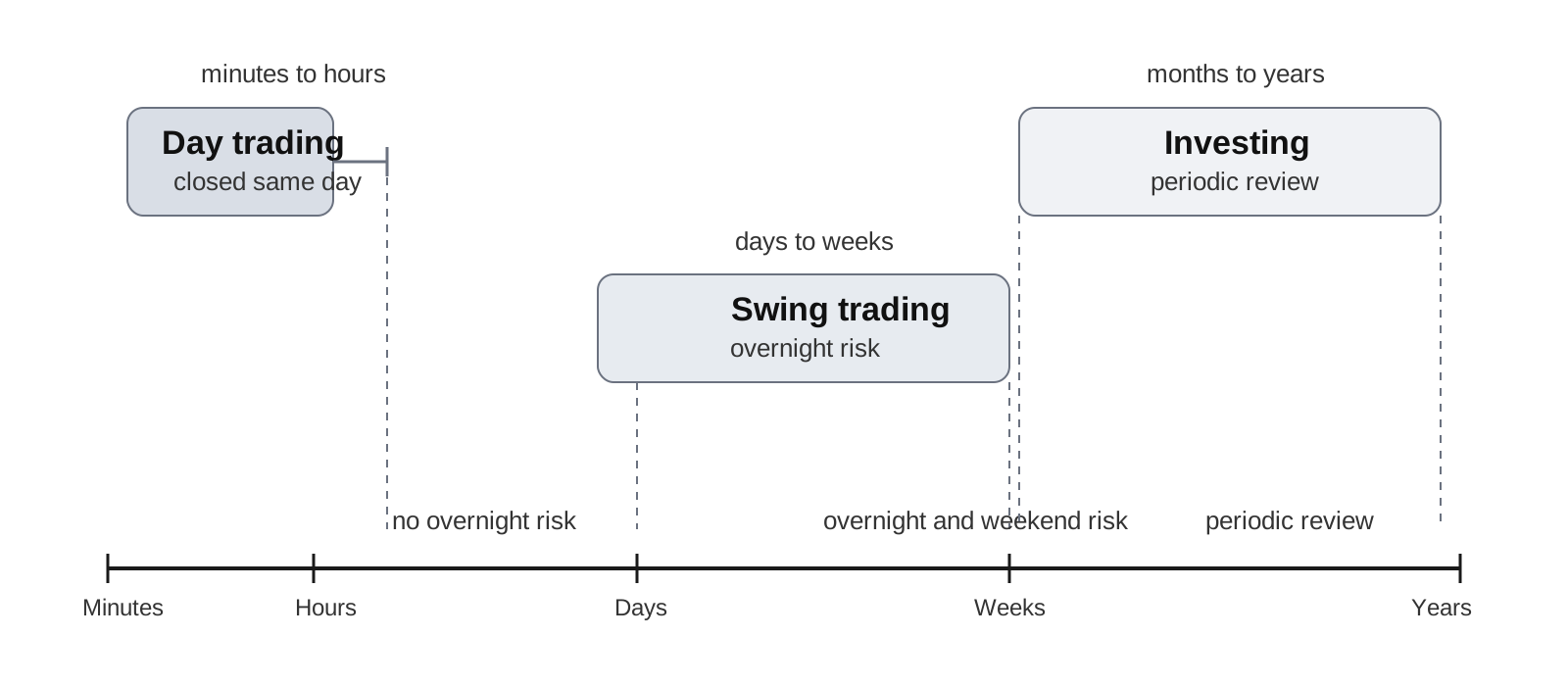
Operationally, day trading usually means opening and closing positions within the same trading day. Swing trading usually means holding for several days to several weeks. Investing usually means holding for months, years, or decades. These labels can vary slightly in practice, but they are useful broad definitions for beginners.
One core idea matters before choosing a style: the same market view can lead to very different outcomes depending on turnover. If three people all think an asset may rise, the one who trades in and out most often will usually face more spread cost, more chances of slippage, more tax complexity from short-term transactions, and more opportunities for execution error than the one who acts less often.
This comparison treats the three styles as workflows rather than identities. The useful question is not which label sounds better, but how positions are opened, monitored, and closed, and whether that workflow is realistic to repeat with discipline.
Scope and assumptions
This article compares day trading, swing trading, and investing using approved investor education sources only. It focuses on practical differences in workflow, decision frequency, costs, execution, risk, and sustainability.
The comparison is educational, not personalised advice. It explains common holding-period ranges and trade-offs, but exact labels and methods can vary by market participant.
The sequence follows a simple beginner-friendly logic: first define each style by time horizon, then compare how research cadence, cost friction, risk handling, and sustainability change as turnover rises or falls.
Higher activity does not automatically mean greater sophistication. Fewer decisions can still involve deeper analysis, especially in longer-term investing.
Main narrative
Start with the time horizon
The clearest way to compare these styles is by asking one question first: how long is the position expected to stay open?
Day trading means opening and closing positions within the same day. This removes overnight exposure, but compresses the whole decision process into a short window.
Swing trading usually means holding for several days to several weeks. That gives the trade more time to work, but it also means accepting overnight and weekend risk.
Investing usually means holding for months, years, or decades. Here, the emphasis shifts away from short-term price movement and towards portfolio structure, diversification, asset allocation, and long-term goals.
This is why time horizon is not just a label. It changes the whole workflow.
How the workflow changes
A day trader usually starts with a same-day idea, often linked to intraday volatility, volume, or a scheduled event. Entry planning matters immediately because order type, spread, and execution quality can materially affect a small expected move. Once in the trade, the position is monitored closely. The trade is usually closed before the session ends, and then reviewed in detail because frequent decisions create many chances to repeat mistakes.
A swing trader looks for a move that may develop over days or weeks. The plan still defines entry, invalidation, target area, and size in advance, but it must also account for overnight news and price gaps. Monitoring is regular rather than constant, often at intervals rather than tick by tick. The trade may be closed after several sessions because the target was reached, the thesis changed, or the setup was invalidated.
An investor usually begins with goals, time horizon, diversification, asset allocation, and risk tolerance. Entry planning is less about exact intraday timing and more about what to own, why to own it, how much to own, and how it fits the overall portfolio. Monitoring is periodic. Review focuses less on perfect execution and more on whether the long-term reasons still hold and whether the portfolio remains aligned with the intended risk level and time horizon.
Decision frequency is not the same as skill
Day trading has the highest decision frequency. A trader may need to decide several times within one session whether to enter, reduce, exit, or stand aside.
Swing trading sits in the middle. It still requires planning and discipline, but decisions are more spaced out.
Investing usually has the lowest decision frequency, but that does not make it simplistic. Research depth can be highest here because more time may be spent understanding what is owned and why, rather than reacting to every short-term move.
This is an important beginner distinction: frequency is not the same as sophistication.
Why turnover changes outcomes
All three styles face friction, but not equally.
- Fees and commissions still matter even where headline commission is zero.
- Spread matters because every buy and sell happens across the bid and ask.
- Slippage matters because the executed price can differ from the expected price, especially in fast or less liquid markets.
- Tax friction matters because shorter holding periods can create more short-term taxable events, and wash sale rules may affect loss treatment.
In practice, day traders are usually most exposed to spread and slippage because they trade often and often seek smaller moves. Swing traders usually face less direct trading friction than day traders, but still more execution dependence and more short-term tax complexity than a longer-term investor. Investors usually have the lowest turnover, so spread and commission drag occur less often, although ongoing fund expenses or advisory fees may still matter over time.
A simple example makes the principle clear. If an asset moves from 100p to 108p and a 2p spread applies, a trader buying near 101p and selling near 107p captures 6p, not the full 8p move. If that process is repeated frequently, cost drag rises even if the underlying market view stays broadly the same.
Risk feels different in each style
Day trading removes overnight exposure, but it increases real-time pressure. Quick decisions, market noise, false moves, and execution uncertainty all matter more. Investor education sources warn that day trading is risky and not suited to money needed for living expenses or long-term security.
Swing trading usually brings less intraday intensity, but more uncertainty between sessions. A stop order may not protect at the intended price if the market gaps through it when the next session opens.
Investing usually has the lowest execution stress, but it is not stress-free. The challenge is often behavioural rather than tactical: enduring volatility without turning every setback into a trade. That is where diversification and a clear time horizon become especially important.
Sustainability matters more than labels
For beginners, the most useful question is often not which style sounds most exciting, but which workflow can actually be repeated with discipline.
- Day trading demands the most screen time, the fastest execution discipline, and the strongest protection against overtrading.
- Swing trading is often more manageable from a time perspective, but only if overnight risk and less precise exits are accepted.
- Investing is usually the easiest to sustain operationally because the decision loop is slower and diversification is more practical, though patience and consistency are still required.
There is also a capital pressure difference. A concentrated short-term approach can create pressure to size larger so that small moves feel meaningful. A longer-term diversified approach allows return to build across more time and more holdings, reducing the need to force activity.
A practical checklist before choosing
Use this order when comparing styles:
- Define the expected holding period in plain terms.
- Define how often decisions must be made.
- Identify all friction, including spreads, slippage, commissions, fees, financing, and tax effects.
- Decide whether overnight and weekend risk are acceptable.
- Decide whether the approach depends on concentration or allows diversification.
- Write entry, exit, and review rules before acting.
- Check whether the style encourages unnecessary activity.
- Check any broker account rules that apply, especially margin and day trading restrictions.
If you understand those trade-offs clearly, the differences between day trading, swing trading, and investing become much easier to judge.
Day trading carries significant risk and depends on rapid decisions, close monitoring, and execution quality.
Closing positions before the end of the day removes overnight exposure, but does not remove intraday execution risk or sudden price moves during the session.
Stop orders become market orders when triggered and may execute at significantly different prices in fast markets.
Swing trading accepts overnight and weekend gap risk, so intended exit levels may not be achieved precisely.
Higher turnover usually increases spread cost, slippage exposure, tax complexity, and the chance of execution error.
Investing usually reduces execution stress, but still requires patience, diversification, and the ability to tolerate volatility without unnecessary trading.
Verified callouts
Why turnover changes cost even when the market view is the same
Trading more often usually means paying the spread more often and facing more chances of slippage, even if the underlying market view has not changed. Zero-commission trading does not eliminate trading costs, because costs can still appear in other forms.
Overnight risk versus intraday risk
Closing a position before the end of the day removes overnight exposure, but it does not remove intraday execution risk or sudden price moves during the session. Holding across sessions adds the possibility of gaps and less precise exits.
Why frequency and stress are not the same as skill
A style that requires more decisions is not automatically more advanced. It simply creates more moments where execution, discipline, and emotional control matter. Longer-term investing still requires time, homework, diversification, and risk management.
Update log
- FINRA, Day Trading
- SEC, Day Trading: Your Dollars at Risk
- FINRA, Investing Basics
- Investor.gov, Online Investing
- Investor.gov, Asset Allocation and Diversification
- Investor.gov, Diversify Your Investments
- FINRA, Asset Allocation and Diversification
- FINRA, Fees and Commissions
- SEC, Trade Execution
- Investor.gov, Stop, Stop-Limit, and Trailing Stop Orders
- IRS, Publication 550, Investment Income and Expenses
- Investor.gov, Wash Sales
- Nasdaq, After-Hours Stock Quote Data
- SEC, Disclosure of Order Execution and Routing Practices