

Overview
Constructing and managing an options trade is mainly a sequencing problem. The useful order is to define the payoff and operational obligations first, then choose expiry and strikes, then write the entry and exit rules before placing the trade, and finally manage the position by following those rules rather than improvising.
That order matters because listed options are shaped by contract mechanics as much as by market direction. Exercise style, assignment risk, settlement style, contract size and expiry processing can all change the outcome even when the market view itself has not changed.
In practice, good trade construction balances a few recurring trade offs. Shorter expiries usually offer faster time decay but less time to be right and sharper gamma risk near expiry. Longer expiries usually offer more time and smoother day to day behaviour, but they cost more in premium and can tie up risk for longer. Strikes closer to the underlying tend to be more sensitive and, if sold, carry greater assignment exposure. Strikes further away reduce premium and the chance of finishing in the money, but they do not remove risk.
A sound management plan is rule based. Before entry, decide what will trigger four possible actions: take profit, cut loss, adjust, or do nothing. Doing nothing is not neglect when the original setup, risk cap and time horizon remain intact and no predefined trigger has fired. That discipline matters especially in multi leg positions, where unnecessary changes can create rule drift, add costs and alter the risk profile without a clear reason.
Scope and assumptions
This article explains trade construction and management rules for listed options using the approved research only. It focuses on the order of decisions, the effect of contract mechanics, and the use of predefined management rules.
Exact product terms vary by venue and product. Any claim about exercise style, settlement style or expiry processing should be checked against the contract specifications for the specific product being traded.
The discussion includes common distinctions drawn in the research between listed equity and ETF options in the US, which are commonly physically settled and American style, and many index options, which are cash settled and European style. These are common patterns, not blanket rules for every contract.
Examples are educational and mechanical. Where the research refers to profit targets, loss limits or rolling, those are management conventions chosen in advance rather than universal market rules.
Main narrative
Start with the objective, not the strike. In mechanical terms, ask what the position is trying to do: collect premium, create directional exposure with capped risk, or hedge an existing holding. That first decision shapes everything that follows, including whether assignment is acceptable, whether maximum loss is fixed, and whether a near or far expiry makes sense.
Next, confirm the contract family by checking the product mechanics. For equity and ETF options, confirm whether the contract is physically settled and American style. For index options, confirm whether it is cash settled and European style. This single step changes the management plan. Early assignment risk exists for many equity options, while European style index options typically remove that early assignment risk and settle to cash rather than stock delivery.
Only then choose expiry. Near dated options can suit quick catalysts or premium selling rules that rely on faster theta, but they demand tighter monitoring because risk can change quickly near expiry. Further dated options usually give more time for the thesis to play out and can reduce rushed decisions, but for long options the premium at risk is larger, and for short options capital can be tied up longer.
Strike selection should follow the same logic. Strikes closer to spot are more reactive, bring in more premium if sold, and have a greater chance of finishing in the money. Strikes further away reduce premium and sensitivity and may improve the probability that a sold strike expires out of the money, but they do not remove risk. For short equity options, the closer and deeper in the money the short strike becomes, the more relevant assignment planning becomes.
Liquidity is not a minor detail. If the bid ask spread is wide relative to the option price, a trade that looks acceptable on paper can fail in practice because fills, exits and rolls become expensive and inconsistent. Spread quality is therefore part of risk control, not just convenience. Poor liquidity weakens every downstream rule.
Before entry, write the plan. A usable rule set has five parts: the entry rule, the position sizing assumption, the profit target, the loss limit, and the time based exit or adjustment rule. The opening condition might require a limit order, an acceptably narrow spread and exposure that fits the position budget. Position size should be set by the worst operational outcome, not by premium received alone.
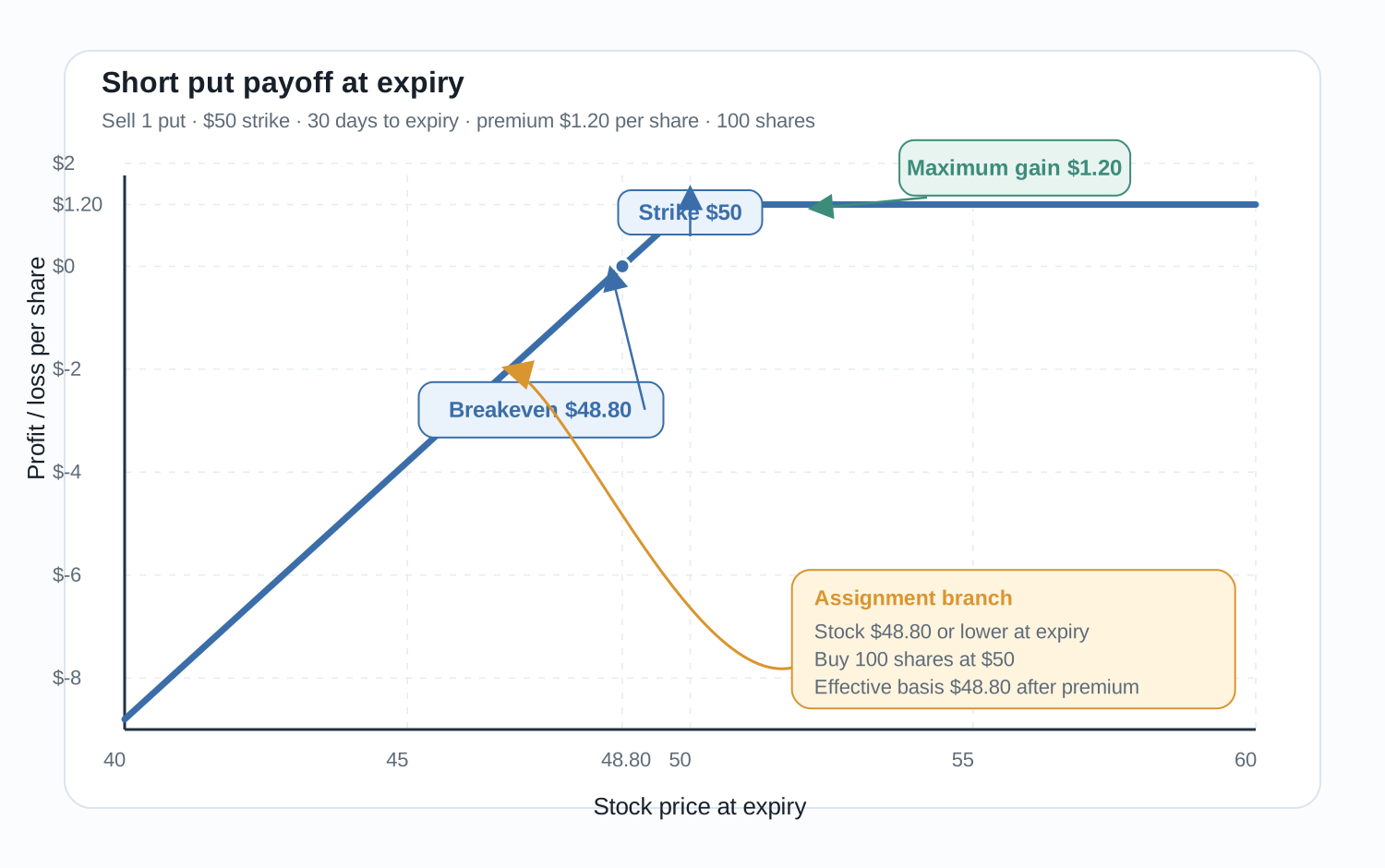
For standard listed equity options, one contract generally represents 100 shares of the underlying. That multiplier belongs in the plan from the start because exercise cost, assignment obligation and notional exposure are all based on contract size. A short put is not just a premium figure on a screen. It can also be a potential obligation to buy 100 shares at the strike per contract if assigned.
Profit taking works best when framed as a chosen management convention rather than a law of the market. For credit positions, a common rule based approach is to close once a preset share of maximum profit is available instead of waiting for the final small amount into expiry. The exact percentage is a house rule, not an exchange mechanic. The same principle applies to loss limits. For defined risk spreads, the loss rule can be tied to a fraction of maximum loss or to the spread price. For undefined risk or assignment based structures, the rule should include a hard point where the position must be closed or changed because the original risk assumption no longer holds.
A time rule also matters. State the latest exit date or a remaining days to expiry threshold. This is especially useful for short options because assignment exposure and end of life price sensitivity can rise into expiry. If adjustments are allowed, define exactly what qualifies. If no preset profit, loss, time or adjustment trigger has fired, the default action is no action.
Once the trade is open, the review loop can stay simple. First check the mechanics: days to expiry, settlement style, exercise style, and whether an ex dividend date or a corporate action increases special assignment risk. Then check price versus strikes. Then check the predefined triggers. Act only if a trigger has fired. Otherwise hold.
This is where discipline matters most. For winners, closing early can make sense when most of the gain has already been realised and the remaining reward is small relative to residual assignment or gap risk. For losers, do not widen the rule set on the fly. If the structure was meant to have capped risk, do not turn it into a larger or undefined risk position simply to avoid taking a loss. That is rule drift.
Rolling deserves the same discipline. It should be treated as a new trade that closes one risk package and opens another. It only makes sense if the new expiry, new strike and new risk profile still satisfy the original construction standards. Otherwise, closing and standing aside is cleaner.
At the end of the process, three outcomes matter. First, assignment or exercise. For a short equity call, assignment means the obligation to sell shares at the strike. For a short equity put, assignment means the obligation to buy shares at the strike. Assignment can occur on any trading day while a short equity option remains open, not only at expiry. Second, expiry. In the options system, automatic exercise is a formal operational process, not a myth or shortcut. Third, no action. If the position remains inside the original plan and none of the preset conditions has fired, holding unchanged is a valid managed outcome.
A practical checklist before entry is simple: confirm product type, exercise style, settlement style and contract multiplier; define the exact payoff objective; choose expiry and strikes to match the time horizon and assignment exposure; reject illiquid series; then write the entry rule, profit target, loss rule, time exit and adjustment trigger before the order is placed.
Two examples from the research make the framework concrete. In a short put on a physically settled equity option, the plan must include not just the premium received but the gross share obligation if assigned. In a cash settled European style index vertical spread, the plan is different because there is no early assignment risk while the trade is open, and expiry is handled through cash settlement rather than stock delivery. The market view may sound similar in both cases, but the management rules are not interchangeable because the mechanics are different.
Contract mechanics can change outcomes. Exercise style, settlement style, contract size and expiry processing must be checked before the trade is placed.
Shorter expiries can increase management burden because risk can change quickly near expiry.
Closer strikes can increase sensitivity and, if sold, increase the relevance of assignment planning.
Poor liquidity and wide bid ask spreads can make entries, exits and rolls expensive and inconsistent, weakening the whole trade plan.
For many equity options, short positions can be assigned before expiry. Assignment is an operational event, not just a chart outcome.
Changing a position without a predefined reason can create rule drift and alter the original risk profile.
Verified callouts
Strike and expiry choices alter both market risk and operational risk
Shorter expiries usually increase the speed of time decay, while nearer strikes tend to increase price sensitivity and the chance that a sold option finishes in the money. For physically settled equity options, sold strikes that move in the money also make assignment planning more relevant because short positions can be assigned before expiry.
An option trade can end in stock delivery or cash settlement
Exercise and assignment are formal contract events processed through OCC and brokerage allocation procedures, not merely a price chart crossing a strike. For equity options this can create a stock purchase or stock sale obligation, while many index options instead settle to cash and avoid share delivery altogether.
No action is a real management choice when the rule set says hold
If no preset profit, loss, time or adjustment trigger has fired, holding the position unchanged is a valid rule based outcome. This matters because changing a trade without a predefined reason can distort the original risk assumptions and turn management into improvisation.
Update log
- Characteristics and Risks of Standardized Options
- Options
- Trading Options: Understanding Assignment
- Options Allocation of Exercise Assignment Notices
- Order Types
- Exchange Traded Stock / ETP Options
- Index Options Benefits: Cash Settlement
- S&P 500 Index Options product page
- S&P 500 Index Options Product Specifications
- SPX Fact Sheet
- Investor Bulletin: An Introduction to Options
- Exercise by Exception