

What this article covers
An option premium can be split into two parts: intrinsic value and extrinsic value. Intrinsic value is what the option would be worth if it expired immediately. Extrinsic value is everything in the premium above intrinsic value, and is often called time value because it reflects the value of having time left for the underlying to move before expiry.
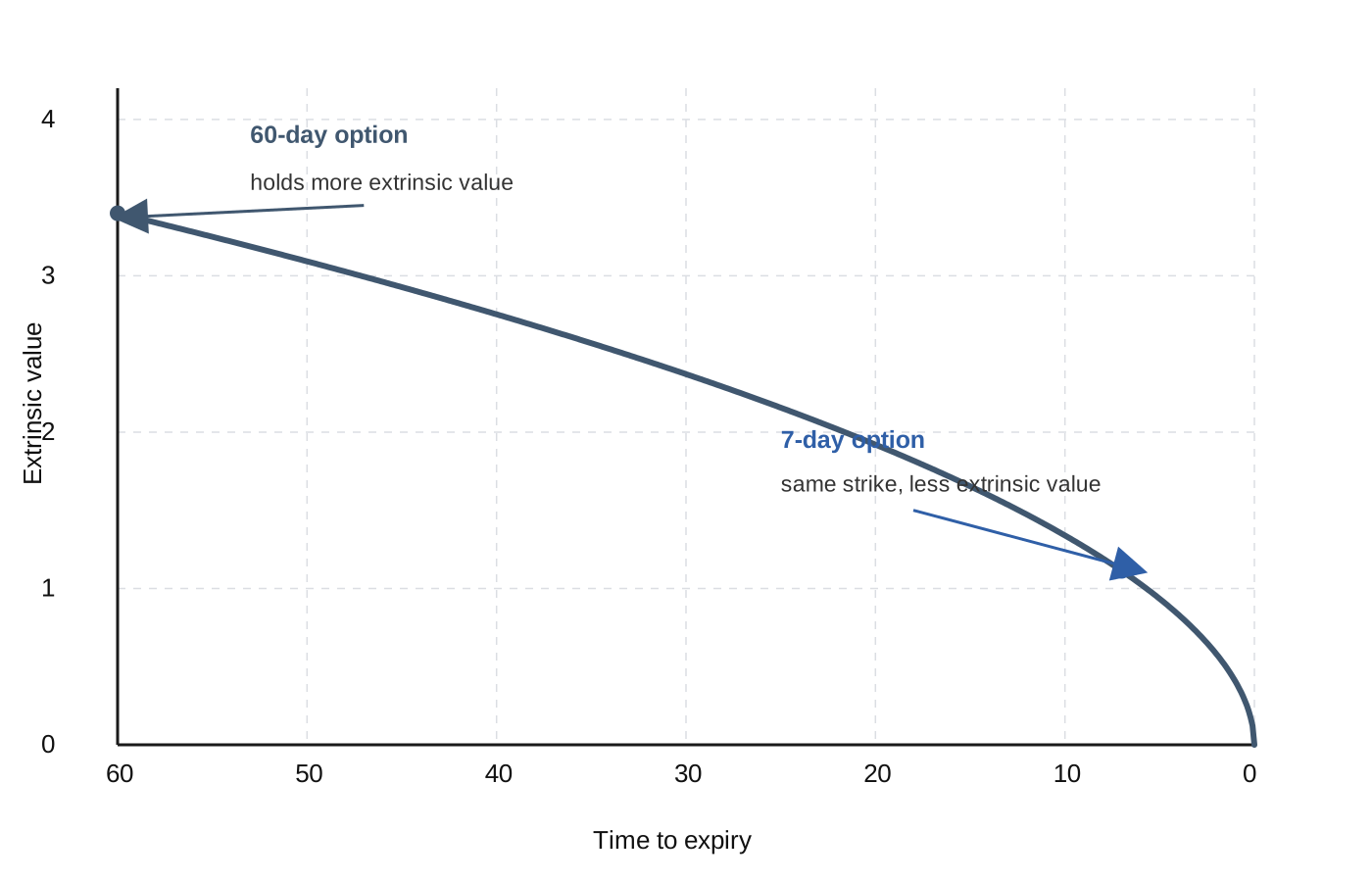
This matters because options are wasting assets. All else equal, the time value portion usually falls as expiry approaches, and that erosion tends to accelerate near expiry. At the same time, implied volatility can raise or lower extrinsic value because it reflects how expensively the market is pricing uncertainty over the life of the option.
A useful starting point is simple: option premium = intrinsic value + extrinsic value. From there, you can assess how much of a contract’s price is tied to where the underlying is now, and how much depends on time remaining and uncertainty priced by the market.
Scope and key assumptions
This article explains time value and volatility using standard options education material only. It focuses on how option premiums are decomposed, why time to expiry matters, how implied volatility affects premiums, and why options with different expiries can trade differently around scheduled events.
The premium discussed here is the market price paid by the buyer and received by the seller. A standard equity option premium is quoted per share, with one contract usually representing 100 shares.
Implied volatility is not a directional forecast. It reflects the market pricing of expected movement or uncertainty, not whether the underlying is expected to rise or fall.
How time value and volatility shape option premiums
Start with the premium split
The clearest way to understand an option premium is to break it into two parts:
Option premium = intrinsic value + extrinsic value
For a call, intrinsic value is the amount by which the underlying price is above the strike. For a put, intrinsic value is the amount by which the strike is above the underlying price. If an option is out of the money, its intrinsic value is zero, so its entire premium is extrinsic value.
In practice, extrinsic value is usually the same practical idea as time value. It is the part of the premium that exists because there is still time left before expiry and because uncertainty is being priced by the market.
Why time value matters
Time matters because more time gives the underlying more opportunity to move into a more valuable state before expiry. That opportunity has value, so otherwise similar options with more time remaining usually carry more extrinsic value.
But time value does not fade in a perfectly straight line. All else equal, it usually falls as expiry approaches, and the erosion tends to become more noticeable near expiry.
There is also a broad pattern across moneyness:
- At the money options usually carry the greatest time value for a given expiry
- Deep in the money options often have little time value because much of the premium is already intrinsic
- Deep out of the money options have no intrinsic value, but their time value is often lower than comparable at the money options because a larger move is needed before expiry
This pattern applies to both calls and puts.
What implied volatility means
Implied volatility is not directly observed. It is inferred from current option prices through an option pricing model. In practical terms, it is a market implied price of uncertainty over the life of that option.
That makes implied volatility useful, but only if you interpret it carefully.
What it does tell you:
- how richly or cheaply uncertainty is being priced in the premium
- how premiums can respond to changes in volatility
- how different strikes and expiries can be priced differently for uncertainty
What it does not tell you:
- it does not tell you direction on its own
- it does not guarantee realised volatility will match implied volatility
- it is not a pure prediction separated from supply, demand, and model assumptions
How volatility affects premiums
Higher implied volatility usually increases premiums for both calls and puts because a wider expected range of outcomes increases the chance of finishing with meaningful value. Lower implied volatility usually reduces premiums.
A plain English way to frame it is:
- price of movement goes up -> extrinsic value usually goes up
- price of movement goes down -> extrinsic value usually goes down
This helps explain why an option can lose value even when the underlying barely moves. If time passes or implied volatility falls, extrinsic value can shrink.
Why expiry date matters as much as strike
Options with different expiries can trade at different implied volatilities. This is the term structure of implied volatility. Markets may price short dated uncertainty differently from medium or long dated uncertainty.
That becomes especially practical around scheduled events. If a major event falls before one expiry but after another, the expiry that contains the event often trades with higher implied volatility. Once the event passes, that layer of uncertainty can be removed, and implied volatility can fall.
This is why two options on the same underlying and strike can behave differently if they expire on different dates.
Two short examples
Example 1: same strike, different expiries
Assume:
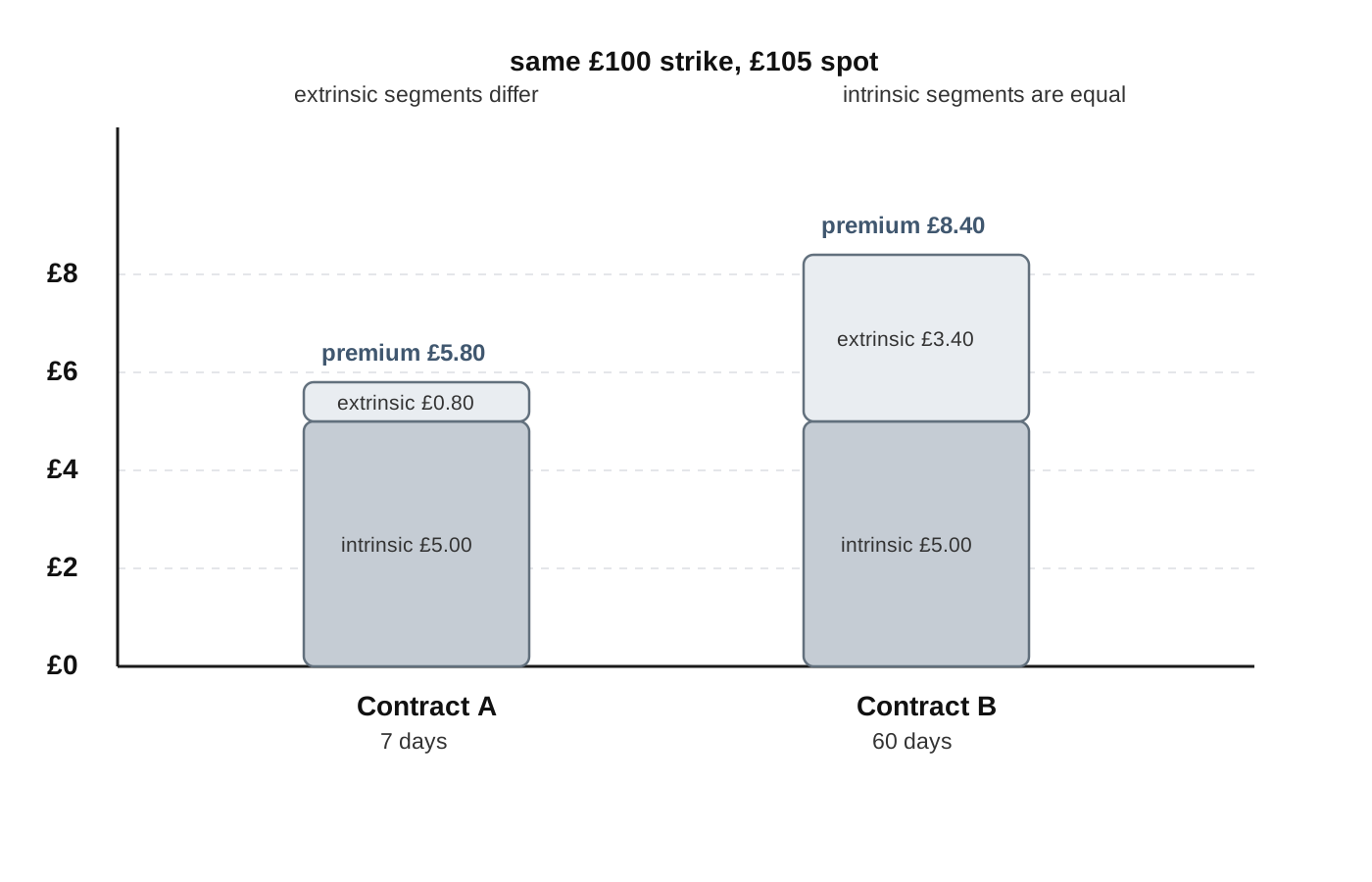
- underlying share price: £105
- strike: £100
- option type: call
- contract A expires in 7 days
- contract B expires in 60 days
- premium for A: £5.80
- premium for B: £8.40
Intrinsic value for both calls is:
- max(105 - 100, 0) = £5.00
Extrinsic value is therefore:
- contract A: £5.80 - £5.00 = £0.80
- contract B: £8.40 - £5.00 = £3.40
Both options have the same intrinsic value, but the longer dated option carries more extrinsic value because it has more time for the underlying to move further before expiry.
Example 2: before and after an event
Assume:
- underlying share price before earnings: £100
- strike: £100
- option type: call
- expiry: 10 days
- day before earnings premium: £4.20
- intrinsic value before earnings: £0.00
- extrinsic value before earnings: £4.20
- after earnings, share price is £100.50
- new premium: £2.10
After the event:
- intrinsic value = max(100.50 - 100, 0) = £0.50
- extrinsic value = £2.10 - £0.50 = £1.60
What changed:
- underlying moved only £0.50
- premium fell from £4.20 to £2.10
- intrinsic value rose by £0.50
- extrinsic value fell by £2.60
The option became slightly in the money, but the premium still fell because a large amount of event related implied volatility was removed after the announcement.
A practical review loop
When you look at an option premium, it helps to follow the same sequence each time:
- Record spot, strike, option type, premium, and expiry date.
- Calculate intrinsic value.
- Subtract intrinsic value from premium to find extrinsic value.
- Check whether the option is in the money, at the money, or out of the money.
- Check exact time to expiry.
- Compare implied volatility across nearby strikes and expiries rather than treating it as one isolated number.
- Ask whether a premium change is mainly coming from the underlying move, time passing, or a change in implied volatility.
- Check whether a scheduled event sits inside the option’s life.
- Reassess after the event because the volatility term structure can change quickly once uncertainty is resolved.
That process keeps the analysis grounded in spot, time, and implied volatility together rather than relying on any one factor in isolation.
If a premium is mostly extrinsic value, it is generally more exposed to time decay and shifts in implied volatility. If it is mostly intrinsic value, behaviour is driven more by the underlying, with less room for extrinsic compression.
Do not treat implied volatility as a directional signal. It reflects priced uncertainty, not whether the underlying is expected to rise or fall.
Time value usually falls as expiry approaches, and the erosion tends to accelerate near expiry.
A premium can fall even if the underlying barely moves, because extrinsic value can shrink through time decay or a drop in implied volatility.
Near dated options near the strike can change quickly, so small spot moves can matter more as expiry approaches.
Options with different expiries can carry different implied volatilities, especially when one expiry includes a scheduled event and another does not.
Verified takeaways
Verified, intrinsic versus extrinsic value in plain terms
Intrinsic value is what the option would be worth if it expired now. Extrinsic value is the remainder of the premium above that amount, mainly reflecting time remaining and uncertainty priced by the market. Out of the money options have no intrinsic value, so their premium is entirely extrinsic.
Verified, implied volatility is not a directional forecast
Implied volatility is inferred from option prices and represents the market pricing of expected movement or uncertainty over the option’s life. It does not, by itself, say whether the underlying is expected to rise or fall. Calls and puts can both become more expensive when implied volatility rises.
Verified, event risk can raise implied volatility before the event and reduce it after the event
Scheduled events can concentrate uncertainty into specific expiries, lifting the implied volatility of options that contain that event. Once the event passes, that layer of uncertainty is removed, so implied volatility and extrinsic value can fall even if the underlying hardly moves.
Revision history
- The Options Clearing Corporation, Characteristics and Risks of Standardized Options
- FINRA, Options
- Investor.gov, Investor Bulletin: An Introduction to Options
- Options Industry Council, Options Pricing
- Options Industry Council, FAQ: Technical Information
- Cboe, VIX Term Structure
- Cboe, Volatility Trading