

Use observable conditions, then eliminate what does not fit
A useful options framework should help you rule strategies in and out without leaning on hunches. The simplest way to do that is to focus on conditions you can actually check before entry: your directional view, implied volatility relative to the underlying’s own recent history, your time horizon, available capital, assignment tolerance, maximum acceptable loss and market liquidity.
This framework covers four listed options structures only: covered calls, cash-secured puts, vertical spreads and the iron condor. The main divide is not how complicated a strategy looks. It is the form of risk it creates. Covered calls and cash-secured puts are straightforward to describe, but both carry stock-linked exposure and assignment risk. Vertical spreads and iron condors can cap maximum loss at entry if they remain intact as spreads, but short options in those structures can still be assigned before expiry.
Start with exclusions before preferences. If liquidity is poor, rule the strategy out. If maximum acceptable loss must be small and fixed, rule out stock-linked structures. If assignment would be operationally unacceptable, treat short American-style equity options cautiously or avoid them. If capital is not enough to take or hold shares, eliminate covered calls and cash-secured puts first.
What this framework covers, and what it assumes
The framework is limited to exchange-traded U.S. equity options and four core strategies: covered calls, cash-secured puts, vertical spreads and iron condors.
One standard equity option contract usually represents 100 shares. Standard U.S. equity options are American-style and physically settled, so a short call or put can be assigned before expiry and assignment results in stock delivery or purchase rather than a cash difference.
Defined risk here means the payoff structure has a capped worst case at entry if the spread is managed as a spread. Covered calls are not unlimited-risk, but they are not defined-risk in the same sense because most downside comes from the long shares. Cash-secured puts also retain large stock-like downside, partly offset by premium.
This framework does not use price targets. It only asks whether the expected path over the intended holding period is up, sideways or down, and whether the account can handle the capital and assignment implications of the chosen structure.
A repeatable decision loop for four core options structures
A clean strategy selection process begins by placing the trade idea into one of four directional buckets: bullish, neutral to mildly bullish, neutral range-bound, or bearish. That keeps the first decision objective. You do not need a precise target. You only need a view on whether the likely path is up, sideways or down over the holding period.
Next, check implied volatility against the underlying’s own recent history. If implied volatility is relatively high, option-selling structures are generally better supported because premiums are richer. If it is relatively low, premium-selling structures may offer too little reward for the risk taken, which can be a valid reason to rule out covered calls, cash-secured puts, narrow credit spreads or iron condors. In lower implied volatility conditions, long premium or lower-cost defined-risk structures are usually easier to justify.
Then set the time horizon. Short-dated positions face faster time decay, more pin risk near expiry and a tighter window for assignment decisions. Longer-dated positions tie up capital for longer and can face more event risk. A practical rule is to use the shortest expiry that still gives the thesis enough time to play out and still offers acceptable liquidity at the strikes you need.
After that, check capital and buying power fit. A covered call needs ownership of 100 shares per short call. A cash-secured put needs enough cash to buy 100 shares at the strike if assigned. A vertical spread needs only the net debit paid, or for a credit spread the strike width minus the credit, as maximum loss. That is why verticals and iron condors are structurally more efficient when risk must be capped in cash terms.
Assignment tolerance comes next because it can eliminate an otherwise appealing idea. On U.S. equity options, a short American-style call or put can be assigned on any business day up to expiry. A covered call writer may have to deliver shares. A cash-secured put writer may have to buy shares. In a spread, the short leg can be assigned while the protective long leg remains unexercised unless the trader acts.
Only after those checks should you define the final strategy. If maximum acceptable loss must be hard-capped at entry, the eligible set narrows to defined-risk structures such as a vertical spread or iron condor. If stock ownership or share retention is acceptable, covered calls and cash-secured puts stay in the mix.
Strategy map
- Neutral to mildly bullish + willing to own shares now + already hold stock: covered call
- Neutral to mildly bullish + willing to own shares on a pullback + cash available: cash-secured put
- Bullish or bearish + fixed maximum loss required: vertical spread
- Neutral range-bound + fixed maximum loss required + liquid chain: iron condor
Liquidity is a final filter, not a small detail. Rule out any candidate if the chain does not have tight bid-ask spreads relative to the option price, adequate displayed volume and open interest, multiple strikes around the intended level, and usable liquidity in the chosen expiry. If entering and exiting would likely surrender a large fraction of the expected premium to the spread, the strategy should be excluded in that name or expiry.
With those filters in place, the four strategies separate clearly. A covered call fits a neutral to mildly bullish outlook when shares are already owned and selling them at the strike is acceptable. A cash-secured put fits a similar outlook when shares are not yet owned but would be welcome at the strike, with cash reserved in case of assignment. A vertical spread fits a bullish or bearish view when maximum loss must be known at entry and capped. An iron condor fits a neutral range-bound thesis when defined loss is required and liquidity is good on both sides of the structure.
The rule-outs matter just as much as the fits. Covered calls should be ruled out when the view is strongly bullish, when shares are not wanted, when poor liquidity makes execution weak, or when maximum loss must be tightly capped. Cash-secured puts should be ruled out when there is no desire to own shares, when capital is not enough to purchase 100 shares, when maximum cash loss must be narrow and fixed, or when liquidity is poor. Vertical spreads should be ruled out when directional conviction is too low, selected strikes are illiquid, or short-leg assignment would be difficult to manage. Iron condors should be ruled out when the view is directional, when event risk threatens a large gap, when one side of the chain is illiquid, or when near-expiry assignment management would be unacceptable.
Mechanical management rules help keep the framework objective after entry as well. Exit before expiry if assignment is not acceptable. Close or reduce if liquidity deteriorates sharply. For covered calls, close or roll if keeping the shares matters more than additional premium. For cash-secured puts, close if the thesis changes and share ownership is no longer wanted. For vertical spreads, consider taking gains before the final days if most of the maximum profit is already available and the remaining reward is small relative to assignment and gap risk. For iron condors, avoid holding near expiry if price is close to either short strike and pin risk or assignment would be awkward.
Worked comparison 1: covered call versus cash-secured put
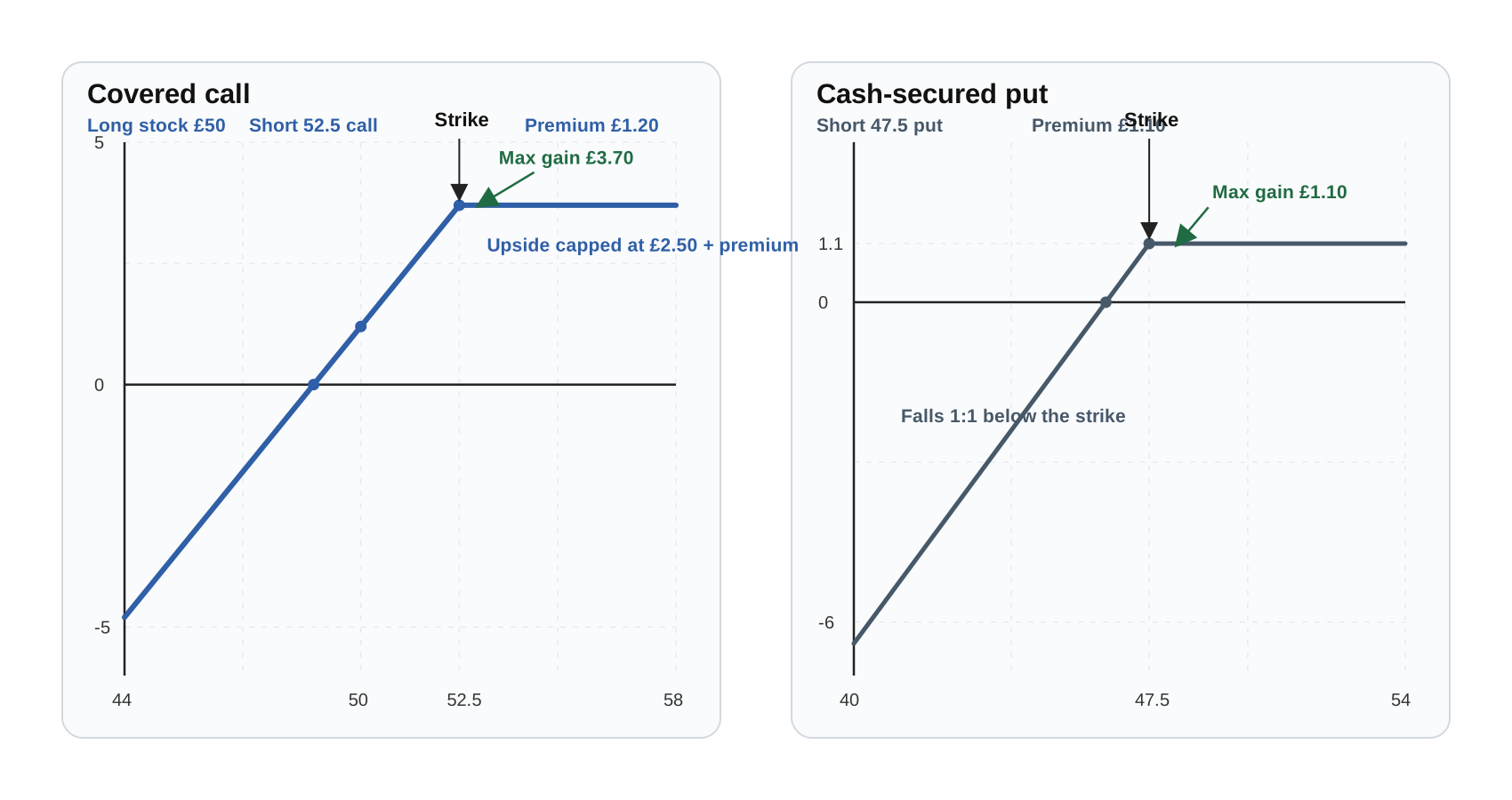
Assume a £50 share price, 30 days to expiry, a 52.5 covered call premium of £1.20 and a 47.5 cash-secured put premium of £1.10.
For the covered call, owning 100 shares at £50 costs £5,000. Selling the 52.5 call brings in £120. Maximum gain is £370 if the shares are called away, made up of £2.50 per share of stock gain plus £1.20 of premium. Break-even on the combined position is £48.80. The downside remains similar to long stock below break-even.
For the cash-secured put, selling the 47.5 put brings in £110 and requires £4,750 of cash to be reserved. Maximum gain is the premium only. If assigned, the effective purchase price is £46.40, which is the strike less the premium received. Downside after assignment is stock-like below that level.
If the shares are already owned and there is willingness to sell at 52.5, the covered call fits better. If the shares are not owned and the aim is to enter only at a discount, the cash-secured put fits better.
Worked comparison 2: vertical spread versus iron condor
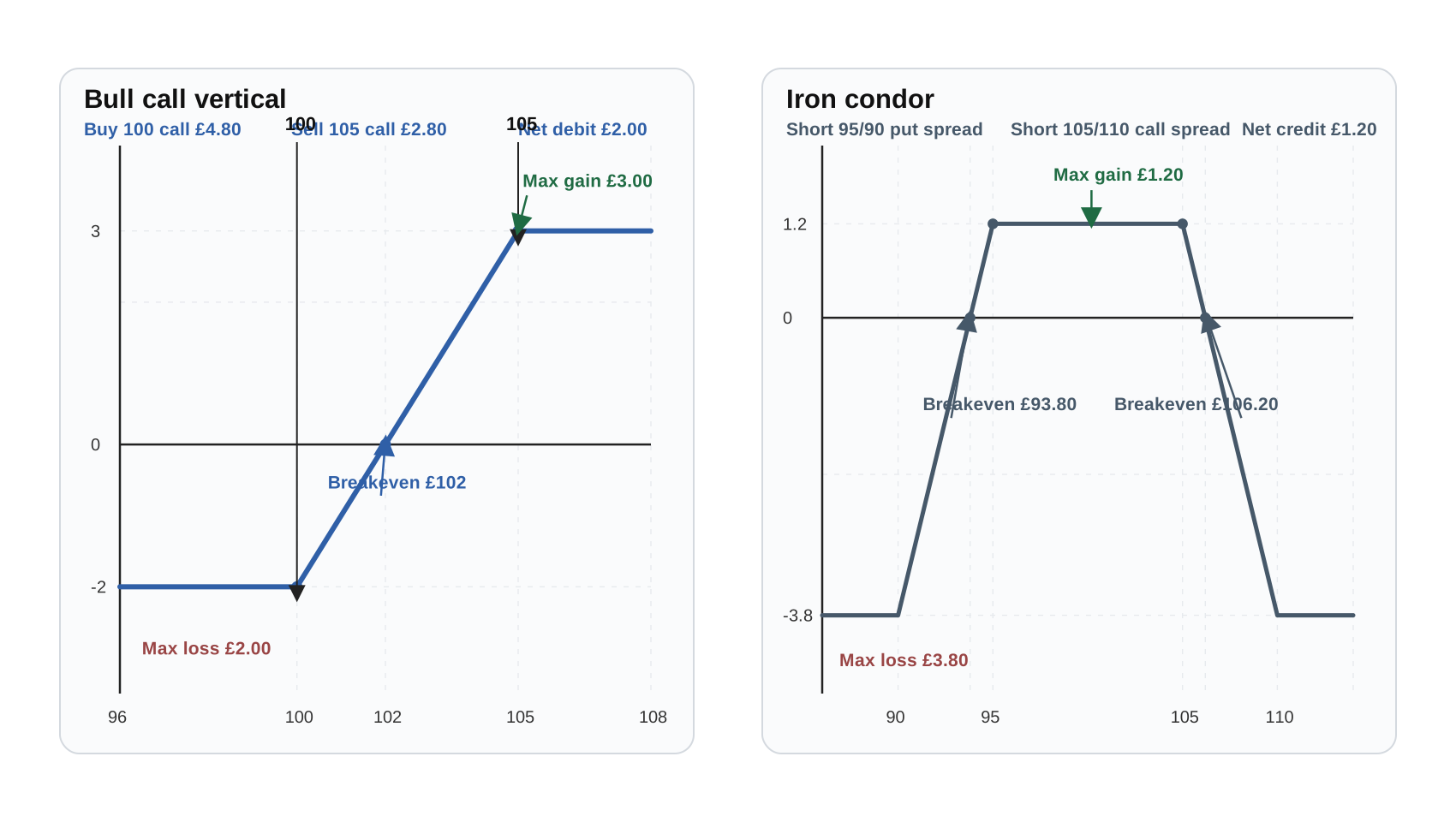
Assume a £100 stock, 45 days to expiry, moderate to high implied volatility, a liquid chain, a maximum acceptable loss of about £250 per position, and a mildly bullish view.
A bull call vertical using the 100 and 105 strikes costs a net £2.00, or £200 per spread. With a £5 width, maximum gain is £300 and maximum loss is £200. Break-even at expiry is £102.
An iron condor using a 95/90 put spread and a 105/110 call spread for a net credit of £1.20 has maximum gain of £120 and maximum loss of £380.
The vertical is the better selection because the input is mildly bullish, not neutral. The iron condor is built for a range-bound view and introduces two-sided short premium exposure that does not match the directional input. The vertical aligns with the view and stays within the stated loss limit.
Practical checklist before entry
- Classify the directional view as bullish, neutral to mildly bullish, neutral range-bound or bearish
- Check implied volatility against the underlying’s own recent range
- Choose an expiry with enough time for the thesis and acceptable liquidity
- Check bid-ask spread, volume and open interest
- State the maximum acceptable loss in cash terms
- Confirm capital for 100-share delivery or purchase if relevant
- Confirm assignment tolerance
- Rule out any strategy that fails one of those checks
- Select only the strategy that matches direction, volatility, capital and risk form
Short American-style equity options can be assigned before expiry, including short legs inside spreads.
Covered calls and cash-secured puts are not defined-risk in the same sense as vertical spreads or iron condors because they retain substantial stock-linked exposure or purchase obligation.
Poor liquidity can widen execution cost, reduce tradability and make exits harder, which is enough reason to reject a strategy.
Short-dated positions increase sensitivity to time decay, pin risk near expiry and compressed assignment decisions.
Ex-dividend periods can make early assignment on short calls especially undesirable when keeping shares matters.
Iron condors involve more legs, more execution sensitivity and more management complexity than a single vertical spread.
High-confidence takeaways drawn directly from the source material
When covered calls fit better than cash-secured puts, and vice versa
If shares are already owned and selling them at a chosen strike is acceptable, a covered call is the cleaner fit. If shares are not yet owned but there is willingness to buy 100 shares at a lower strike and cash is reserved for that purpose, a cash-secured put fits better. Both are short premium positions on American-style, physically settled equity options, so assignment tolerance is a required condition.
Defined risk is about the structure, not merely the idea
A vertical spread or iron condor has a maximum loss that can be calculated from strikes and net premium at entry, provided the spread is managed as a spread. Covered calls and cash-secured puts do not cap downside in the same way. They retain substantial stock-linked exposure or purchase obligation, even though premium slightly improves break-even or effective entry. Short legs in spreads can still be assigned early, creating operational risk even when payoff risk is structurally capped.
A good payoff diagram is not enough
Attractive premium or a neat theoretical setup is not sufficient if the option chain is illiquid or if assignment would create stock delivery or purchase obligations the account cannot handle. Assignment can occur before expiry on short American-style positions, while bid-ask spread, volume and open interest directly affect entry, exit and adjustment quality. If either condition fails, exclude the strategy before trade entry.
Publication history
- Characteristics and Risks of Standardized Options
- Equity Options Product Specifications
- Trading Options: Understanding Assignment
- Options
- Options Assignment FAQ
- Exchange Traded Stock
- Defining Options
- Secured Put / Cash-Secured Put
- What Is an Options Spread Trade?
- ITM vs. OTM Options for Spread Traders
- Risks of Options Assignment
- Money Due: Handling Credit Spread Assignment
- Important factors for options liquidity transcript