

Strategy selection that does not rely on opinions
Overview
Strategy selection becomes more repeatable when it starts with conditions that can be checked before entry rather than with predictions that cannot. This framework is built around four listed options structures only: covered calls, cash-secured puts, vertical spreads, and one neutral defined-risk structure, the iron condor. The inputs are objective and practical: directional view, implied volatility conditions, time horizon, capital available, assignment tolerance, maximum acceptable loss, and market liquidity.
The most useful dividing line is not simple versus advanced. It is risk form. Covered calls and cash-secured puts are operationally straightforward, but both keep substantial stock-style exposure and potential assignment, with much larger capital use than a comparable defined-risk spread. Vertical spreads and iron condors cap maximum loss at entry if managed as intact spreads, but they still carry early assignment risk on the short leg because the protective long option does not exercise itself automatically.
For that reason, the process begins by ruling things out. If liquidity is poor, the strategy is excluded. If maximum acceptable loss must be small and fixed, stock-linked structures are excluded. If assignment would be operationally unacceptable, any short American-style equity option should be treated cautiously or avoided. If capital is not sufficient to take or hold shares, covered calls and cash-secured puts are usually the first to be removed from consideration.
Standard U.S. equity options are generally standardised, with one contract usually representing 100 shares. Standard equity options are also generally American-style and physically settled, which means a short option can be assigned before expiry and exercise or assignment results in stock delivery rather than a cash difference. Those details matter because they affect capital needs, assignment handling, and strategy suitability.
Core definitions
Step by step walkthrough
The decision loop
The decision loop works best when the same inputs are checked in the same order every time. Start with direction, then implied volatility, then time horizon, assignment tolerance, loss tolerance, capital, and finally liquidity. This keeps the process grounded in conditions that can actually be verified before entry.
The framework is intentionally selective. It is better to exclude a strategy early than to force a trade into a structure that does not fit the account, the chain, or the operational reality of assignment and stock delivery.
Worked examples
The examples below use stated assumptions only. They are included to show how the framework separates similar-looking strategies by objective conditions rather than by preference.
Assume a £50 equivalent share price, one contract representing 100 shares, 30 days to expiry, a 52.5 strike covered call premium of £1.20, and a 47.5 strike cash-secured put premium of £1.10. No commissions or taxes are included. The objective view is neutral to mildly bullish over 30 days, and the trader is comfortable either holding current shares or buying shares on a dip.
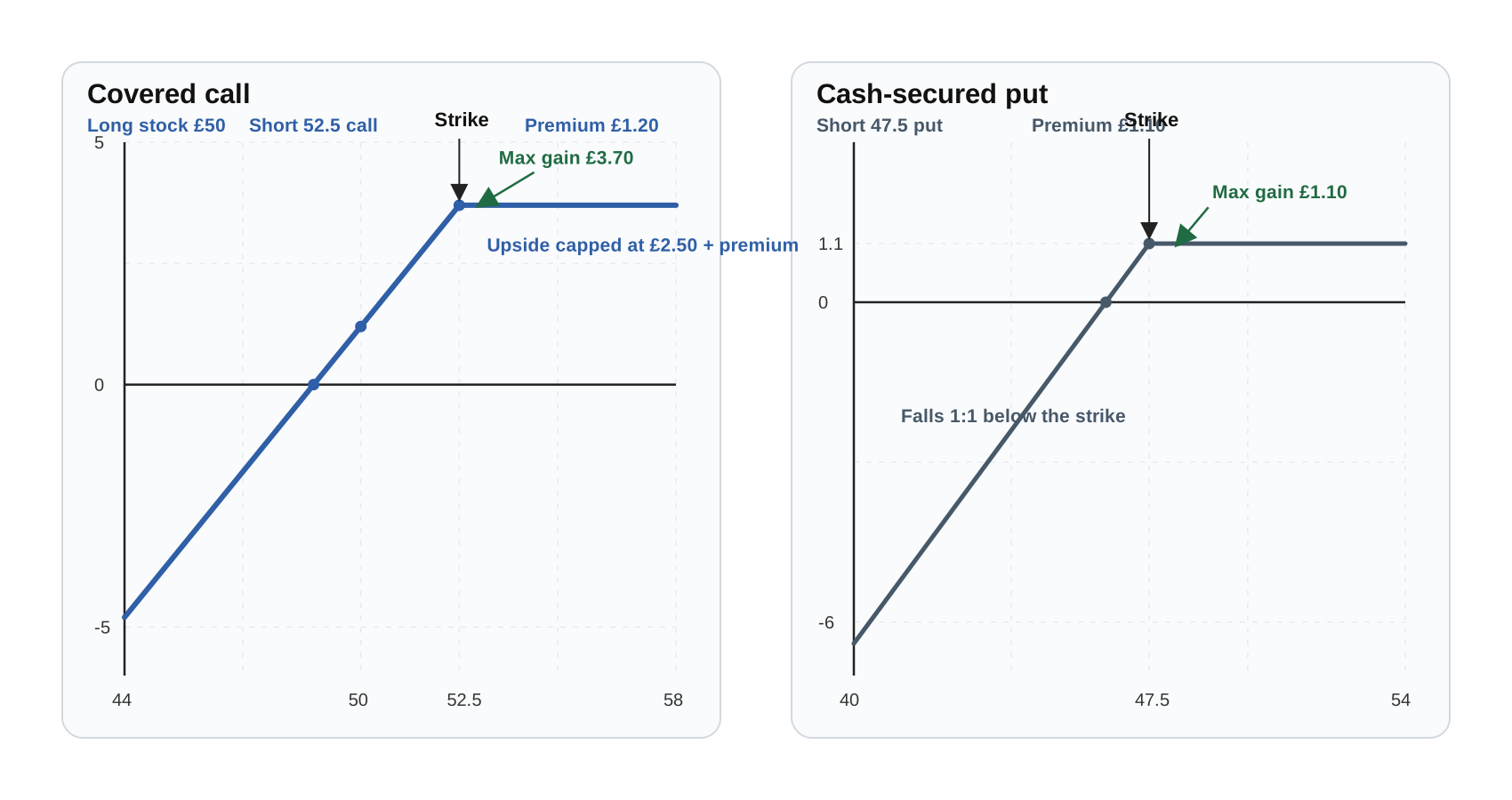
Covered call: buy or own 100 shares at £50 for a £5,000 stock cost and sell 1 call at 52.5 for £1.20, receiving £120 premium. Maximum gain, if shares are called away, is the £2.50 share gain plus £1.20 premium, or £3.70 per share, equal to £370. Break-even on the combined position is £50.00 minus £1.20, or £48.80. Below break-even, the downside is similar to long stock.
Cash-secured put: sell 1 put at 47.5 for £1.10, receiving £110 premium, and reserve £4,750 cash in case of assignment. Maximum gain is the premium only, £110. The effective purchase price if assigned is £47.50 minus £1.10, or £46.40. Below £46.40 after assignment, the downside is stock-like.
The selection depends on starting conditions. If the shares are already held and selling them at 52.5 is acceptable, the covered call fits better because it monetises sideways to mildly higher movement while accepting capped upside. If the shares are not held and the aim is to enter only at a discount, the cash-secured put fits better because it uses less cash than buying shares at £50 outright and targets an effective entry near £46.40.
| Measure | Basis | Value |
|---|---|---|
| Equivalent share price | Stated | £50.00 |
| Covered call strike | Stated | £52.50 |
| Covered call premium | Stated | £1.20 |
| Covered call stock cost | 100 shares at 50 | £5,000.00 |
| Covered call premium received | 1.20 times 100 | £120.00 |
| Covered call maximum gain per share | 2.50 share gain plus 1.20 premium | £3.70 |
| Covered call maximum gain | 3.70 times 100 | £370.00 |
| Covered call break-even | 50.00 minus 1.20 | £48.80 |
| Cash-secured put strike | Stated | £47.50 |
| Cash-secured put premium | Stated | £1.10 |
| Cash-secured put premium received | 1.10 times 100 | £110.00 |
| Cash reserved for assignment | 47.50 times 100 | £4,750.00 |
| Cash-secured put effective purchase price | 47.50 minus 1.10 | £46.40 |
| Covered call maximum gain | £370.00 | |
Assume an underlying stock at £100, 45 days to expiry, moderate to high implied volatility, a liquid chain, a maximum acceptable loss of about £250 per position, and a mildly bullish rather than neutral view.
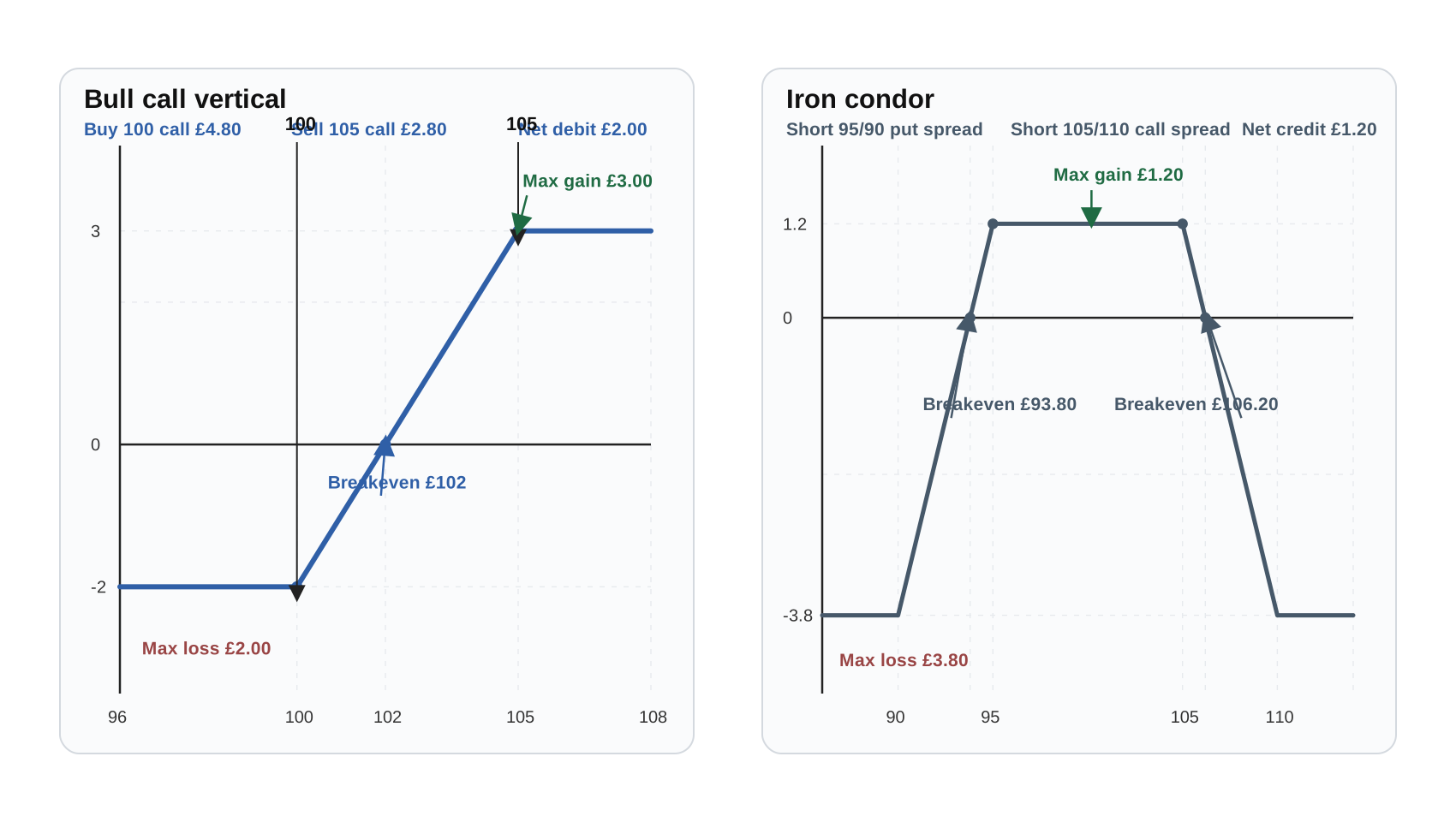
Bull call vertical: buy the 100 call for £4.80 and sell the 105 call for £2.80. The net debit is £2.00, or £200. With a £5.00 spread width, the maximum loss is £200 and the maximum gain is £300. Break-even at expiry is £102.00.
Iron condor: sell the 95 put and buy the 90 put, and sell the 105 call and buy the 110 call, for a net credit of £1.20. With a £5.00 width, maximum gain is £120 and maximum loss is £380. The best outcome requires the stock to remain between 95 and 105.
The vertical is selected because the objective input is mildly bullish, not neutral. The iron condor relies on a range-bound outcome and creates two-sided short premium exposure, so it does not match the directional view. The bull call vertical aligns directly with the bullish thesis, respects the roughly £250 loss limit, and uses less capital than share-based strategies.
| Measure | Basis | Value |
|---|---|---|
| Underlying stock price | Stated | £100.00 |
| Long 100 call | Stated price | £4.80 |
| Short 105 call | Stated price | £2.80 |
| Net debit | 4.80 minus 2.80 | £2.00 |
| Bull call cost | 2.00 times 100 | £200.00 |
| Bull call maximum loss | Net debit | £200.00 |
| Bull call maximum gain | 5.00 spread minus 2.00 debit, times 100 | £300.00 |
| Bull call break-even at expiry | 100.00 plus 2.00 | £102.00 |
| Iron condor net credit | Stated | £1.20 |
| Iron condor maximum gain | 1.20 times 100 | £120.00 |
| Iron condor maximum loss | 5.00 width minus 1.20, times 100 | £380.00 |
| Bull call maximum loss | £200.00 | |
Checklists
A strategy should be selected only after each item below has been checked. The purpose is to make the decision process repeatable and to stop attractive premiums from overriding unsuitable risk, capital, or liquidity conditions.
Pre-trade strategy selection checklist
Position management and exit checklist
Glossary
- Assignment
The obligation imposed on a short option writer when the long holder exercises. For a short call, shares must be delivered. For a short put, shares must be purchased.
- American-style option
An option that can be exercised on any business day up to expiry. Standard U.S. equity options are American-style.
- Covered call
Long 100 shares plus short 1 call against those shares. Upside is capped at the strike, while downside is mostly stock downside reduced by premium received.
- Cash-secured put
A short put with enough cash reserved to buy 100 shares at the strike if assigned.
- Vertical spread
Two calls or two puts with the same expiry and different strikes, creating defined payoff boundaries.
- Iron condor
A short call spread combined with a short put spread in the same expiry, used for a neutral range-bound view.
- Implied volatility
The market’s embedded estimate of future volatility reflected in option prices.
- Liquidity
How easily an option can be traded without a large price concession, commonly assessed using bid-ask spread, volume, and open interest.
- Pin risk
Uncertainty near expiry when the underlying is close to a strike, increasing the chance of unexpected exercise or assignment outcomes.
Verified callouts
When covered calls fit better than cash-secured puts, and vice versa
If shares are already owned and selling them at a chosen strike is acceptable, a covered call is the cleaner fit. If shares are not yet owned but there is willingness to buy 100 shares at a lower strike and cash is reserved for that purpose, a cash-secured put fits better. Both are short premium positions on American-style, physically settled equity options, so assignment tolerance is a required condition.
Defined risk is about the structure, not merely the idea
A vertical spread or iron condor has a maximum loss that can be calculated from strikes and net premium at entry, provided the spread is managed as a spread. Covered calls and cash-secured puts do not cap downside in the same way; they retain substantial stock-linked exposure or purchase obligation, even though premium slightly reduces the effective entry or break-even point. Short legs in spreads can still be assigned early, which creates operational risk even when payoff risk is structurally capped.
A good payoff diagram is not enough
An attractive premium or theoretical edge is not sufficient if the option chain is illiquid or if assignment would create stock delivery or purchase obligations the account cannot handle. Assignment can occur before expiry on short American-style positions, while liquidity measures such as bid-ask spread, volume, and open interest directly affect entry, exit, and adjustment quality. If either condition fails, the strategy should be excluded before trade entry.
Internal links
Definitions
- What is a call option
- What is a put option
- American-style versus European-style exercise
- Physical settlement versus cash settlement
- Assignment and exercise
- Covered call definition and payoff
- Cash-secured put definition and payoff
- Vertical spread definition and payoff
- Iron condor definition and payoff
- Implied volatility explained
- Bid-ask spread, volume, and open interest
- Break-even, maximum profit, and maximum loss
- Ex-dividend date and early assignment risk
- Pin risk near expiry
- Buying power and cash securing basics
High level comparison
Covered calls and cash-secured puts are often grouped together because both collect premium and can suit a neutral to mildly bullish view. The practical difference is the starting position. A covered call starts with owned shares and accepts selling them at the strike if assigned. A cash-secured put starts without shares but with enough cash reserved to buy them if assigned.
Vertical spreads and iron condors belong to the defined-risk side of the map. A vertical spread expresses a one-sided bullish or bearish view with capped upside and capped downside. An iron condor expresses a neutral range-bound view with defined maximum loss, but adds more legs and more execution sensitivity.
The framework does not rank one structure as better in general. It asks which one fits the observable conditions: direction, implied volatility, time horizon, capital, assignment tolerance, maximum acceptable loss, and liquidity. If the inputs do not support a strategy, the correct decision is to rule it out.
Cash settlement versus physical settlement in this framework
This framework is built around standard U.S. equity options, which are generally physically settled rather than cash settled. That matters because assignment and exercise result in stock delivery or stock purchase rather than a cash difference. Covered calls and cash-secured puts therefore create direct share delivery or purchase obligations if assigned.
It also matters for spreads. Even though a vertical spread or iron condor has defined payoff boundaries if kept intact, the short leg can still be assigned early while the long leg remains unexercised unless the trader acts. In practical terms, strategy selection cannot ignore settlement style or assignment handling.
Sources
- Characteristics and Risks of Standardized Options
- Equity Options Product Specifications
- Trading Options: Understanding Assignment
- Options
- Options Assignment FAQ
- Exchange Traded Stock
- Defining Options and options basics material
- Secured Put / Cash-Secured Put
- What Is an Options Spread Trade?
- ITM vs. OTM Options for Spread Traders
- Risks of Options Assignment
- Money Due: Handling Credit Spread Assignment
- Transcript on options liquidity factors including bid-ask spread and volume